
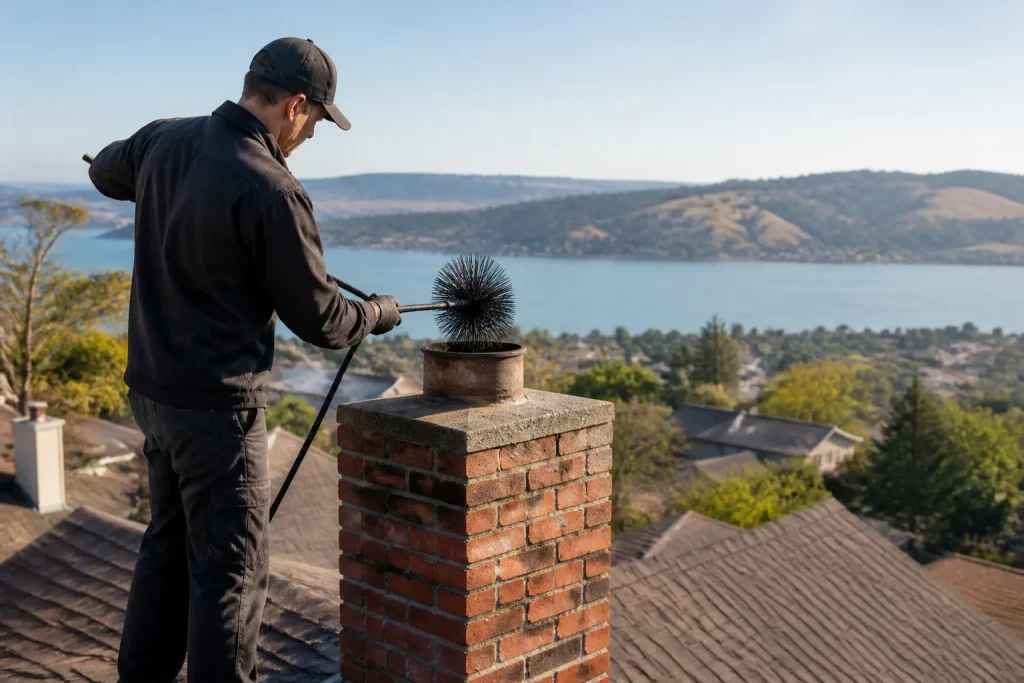
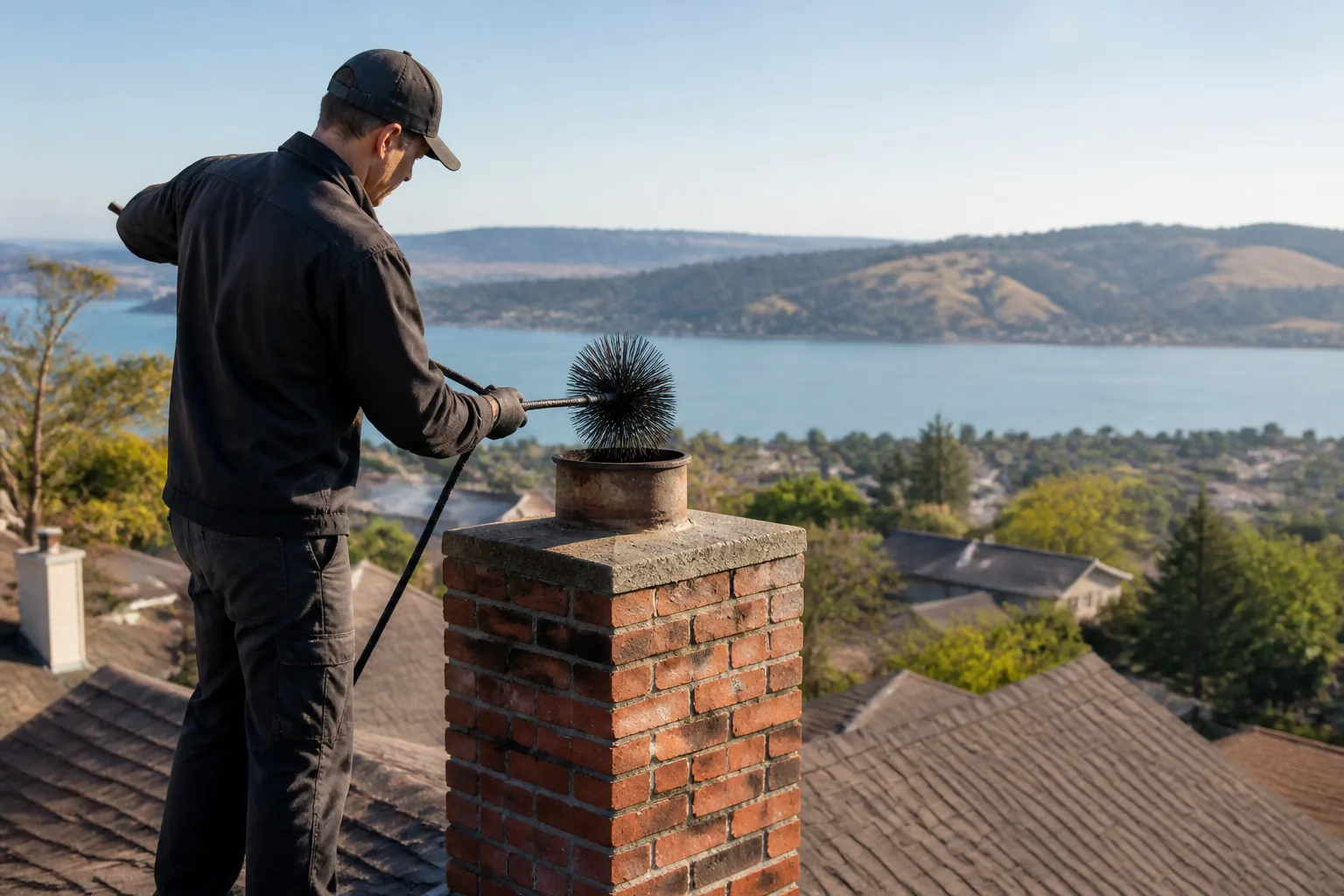
Famco Chimney Sweep in Vallejo: A Homeowner’s Guide
FAMCO doesn’t send a truck to your house. They make the metal parts that go on your roof, and if you’re searching their name next to “chimney sweep,” you’re probably chasing a draft, a water stain on the ceiling, or a cap that looks like it lost a fight with a windstorm. Here’s the honest version: FAMCO is a manufacturer of venting components, not a service company. This guide sorts out which part you actually need, what failure looks like on each, and when the fix is a $40 piece of metal versus a call to a professional. If you’d rather skip the ladder work, call (844) 320-2881.
What does FAMCO actually make, and why does their name show up in chimney research?
FAMCO manufactures venting and chimney components: caps, registers, louvers, and flue covers. That’s the whole picture. They sell through distributors and supply houses to contractors and to homeowners who know what they’re shopping for. They do not sweep chimneys, inspect flues, or install anything.
Homeowners run into the brand for a predictable reason. You start with a fireplace that smokes, or a draft that won’t quit, and a search turns up a part number with FAMCO stamped on the box. Suddenly you’re three videos deep into cap sizing and wondering whether a round cap or a rectangular cover is the answer. In our experience, that’s the moment most people realize they’re shopping for a component they haven’t yet diagnosed. The brand is a starting point, not a solution.
So here’s the framing that saves time. Ask yourself two questions before you buy anything:
- Is the problem inside the flue or on top of it? Draft and smoke complaints can come from either. A cap fixes the outside half. Blockage, a damaged liner, or a damper stuck half-closed lives inside.
- Is water involved? If you’re seeing water stains, the failure is almost certainly in the cap, the crown, or the flashing. No amount of interior cleaning stops a roof leak.
Answer those honestly and the part-shopping list gets much shorter. Getting the answer wrong is the expensive route.
What do the common FAMCO products on Vallejo homes look like when they fail?
Two categories cover most of what we see on Vallejo rooftops: the round cap and the rectangular flue cover. They fail differently, and knowing the difference tells you whether you’re looking at a quick swap or a symptom of something deeper.
Round caps
A round cap is a single-wall unit that sits over a round flue pipe. It usually fails in one of three ways:
- Rust-through on the dome. The top of the cap develops pinholes or a full edge failure. Water runs down the inside of the flue.
- Loose or missing legs. The cap lifts off in wind or sits crooked, which disrupts draft and lets birds in.
- Bird screen breakdown. The mesh rusts or tears, and the flue becomes a roost.
Rectangular flue covers
Rectangular covers top masonry flues, and their failure modes are different:
- Bent or missing mounting straps. The cover shifts off-center, and rain blows in around the flue opening.
- Corrosion at the seams. Water pools at the bottom edge where the cover meets the flue tile.
- Wrong size for the flue. An oversized cover that overlaps the crown gap creates a wind-driven rain problem rather than solving one.
If you’re up on a roof looking at a component you can’t identify, take a photo before you order anything. Fit matters more than brand, and a cap that doesn’t match the flue opening and clearance is a cap that causes trouble.
How do you tell whether the cap, the liner termination, or the damper is causing the draft?
Draft and water complaints rarely announce their source. You have to reason through it. Here’s how we walk homeowners through the diagnosis, in the order that usually finds the answer fastest:
- Check the cap first. Is it intact, square to the flue, and properly screened? A cap that’s bent, missing legs, or oversized is a likely culprit and an easy fix.
- Look at the liner termination. Where the liner meets the cap, is there a visible gap or a loose connection? A termination that isn’t sealed lets water run down the outside of the liner, and that water ends up in the firebox.
- Check the damper. A damper that’s stuck open lets in cold air and rain. One stuck mostly closed causes smoke in the room. Both are common and both are cheap to resolve compared with a liner replacement.
- Look for smoke patterns. Smoke that spills when you first light the fire and then improves points to a cold flue. Smoke that spills continuously points to a blockage or a draft problem that no cap will solve.
If three of the four checks come back clean and smoke is still spilling, the problem is inside the flue. That’s the point to stop guessing and get a proper inspection with a camera. If you’d rather have that inspection done than conduct it, we handle that as part of a standard chimney sweep visit.
Why does professional cap and vent installation matter so much?
A cap is not a decorative trim piece. It’s a functioning part of the flue system, and improper fit does real damage. A cap that’s the wrong diameter or mounted with the wrong clearance can restrict draft, and a restricted draft accelerates creosote buildup and liner corrosion. Similarly, a cap that doesn’t seal correctly at the flue opening routes water down the inside of the chimney, where it works on the liner surface and the masonry.
That’s why we install caps and venting components from a defined roster of professional-grade manufacturers. FAMCO and Gelco product lines support code-compliant cap, cover, and venting component replacements, and the difference between a component that fits and one that’s close enough is the difference between a solved problem and a return visit next spring.
Installation quality matters as much as the part. A cap that’s not level, or whose fasteners corrode in a season, will fail regardless of what’s stamped on it. Professional installation means the fit, the clearances, and the fastening are all done with the whole system in view, not just the piece in your hand. You can read more about our full scope at Chimney Sweep Vallejo.
What does a full-service chimney company do that a parts order doesn’t?
Buying a cap is a transaction. Getting your flue system sorted is a process, and the parts are one step inside it. A full-service company does three things a parts order cannot.
It diagnoses the whole system before it selects a part. A cap replacement on a flue that has a failing liner is a cosmetic fix on a structural problem. Camera inspection tells you which you’re dealing with.
It installs the part correctly and checks it in place. Fit, clearance, and fastening all get verified against the flue, not against the packaging.
It handles the repairs a cap or cover can’t fix. If the inspection turns up a deteriorated liner surface, we use HeatShield flue resurfacing to restore the liner rather than default to a full replacement. That’s a repair option most sweep-only operators don’t offer, and it changes the cost of the job considerably. When a flexible liner is genuinely needed, DuraFlex systems handle the complex or offset flue paths that rigid liners can’t follow.
None of that is glamorous. It’s the difference between fixing what’s wrong and replacing what’s easy.
When should you call a pro instead of ordering a part?
Some cap swaps are safe for a careful homeowner with roof experience. Many aren’t, and the line between them is worth knowing.
Call a professional if any of these are true:
- Your roof is steep, high, or has a surface you can’t safely walk on.
- You’re not certain which component is failing.
- There’s water staining on the ceiling or chimney breast.
- You smell smoke in the house when the fireplace isn’t lit.
- The flue shows visible damage, corrosion, or loose tile.
Chimney work involves heights, and a fall from a roof is serious. We recommend a trained professional any time the answer to “can I reach it safely?” isn’t a clean yes. It’s also worth knowing that dryer vents, not just flues, are a genuine safety concern. Dryer vent cleaning prevents lint buildup that can start a fire, and it’s a service most homeowners don’t think about until a reminder shows up. That’s a task worth handling on a schedule rather than a reaction. We cover that separately in our dryer vent cleaning page.
Related services in Vallejo: chimney sweeping, dryer vent cleaning, and structural chimney repair.
How does Vallejo’s climate affect chimney and vent components?
Vallejo’s mild winters and dry summers mean chimney components tend to fail from sun, wind, and rain rather than from extreme cold. That pattern matters because it shapes which failures are common here. Sun exposure breaks down the coatings and finishes on caps, and the dome of a round cap takes the most of it. Wind-driven rain, more than steady rain, is what finds its way past an off-center cover or an unsealed termination. And because the seasons don’t force the issue with freezing temperatures, small failures can sit on a roof for years without announcing themselves. A cap that’s been quietly leaking since spring is often discovered in the fall when the first fire gets lit. A routine inspection in a Vallejo home catches those before they turn into a liner or masonry problem, and it’s the reason we recommend an annual look at the whole system rather than a reactive call when something breaks.
The Bottom Line
FAMCO makes good venting components, and a properly fitted FAMCO cap can be exactly the right fix for a draft or a water intrusion problem. The catch is that the cap is one part of a system, and choosing it correctly depends on diagnosing what’s actually wrong. If you’re in Vallejo and need help, Chimney Sweep Vallejo offers free estimates – call (844) 320-2881. We answer 24/7. Fast dispatch from 7am to 7pm, Sunday through Friday.
Our technicians have up to 15 years of experience, and we’ll tell you exactly what we found and exactly what it needs. Sometimes that’s a cap. Sometimes it’s a liner resurface. Either way, you’ll know which before you decide.
Frequently Asked Questions
No. FAMCO manufactures venting components such as caps, registers, and flue covers. They don’t provide chimney sweeping or inspection services. If you need a sweep, you need a service company, and the FAMCO part comes after the diagnosis.
Only if you can safely access the roof and you’re confident the replacement cap is the correct size and clearance for your flue. For steep or high roofs, or when the existing cap isn’t clearly the problem, hire a professional. Falling from a roof causes serious injury, and a poorly fitted cap can cause draft and water problems worse than the one you started with.
If the symptom is water entering the firebox or a visual gap at the flue top, start with the cap and termination. If the symptom is continuous smoke spillage, poor draft that doesn’t improve as the flue warms, or visible corrosion inside the flue, the liner is the more likely culprit. A camera inspection settles it. Call (844) 320-2881 for an inspection.
A professional company diagnoses the whole flue system with a camera before choosing parts, installs components to correct clearance and fit, and handles repairs like liner resurfacing that a parts order can’t address. The parts are one step. The inspection is what tells you which step you’re actually on, and skipping it is how homeowners end up buying the wrong cap twice.
Written by the team at Chimney Sweep Vallejo.
Need Chimney Cleaning Help?
Call Chimney Sweep Vallejo - licensed & insured, with free written estimates in Vallejo.
(844) 320-2881