
Last updated November 15, 2026
 Sweep & inspection
 Caps & crowns
 Flue relining
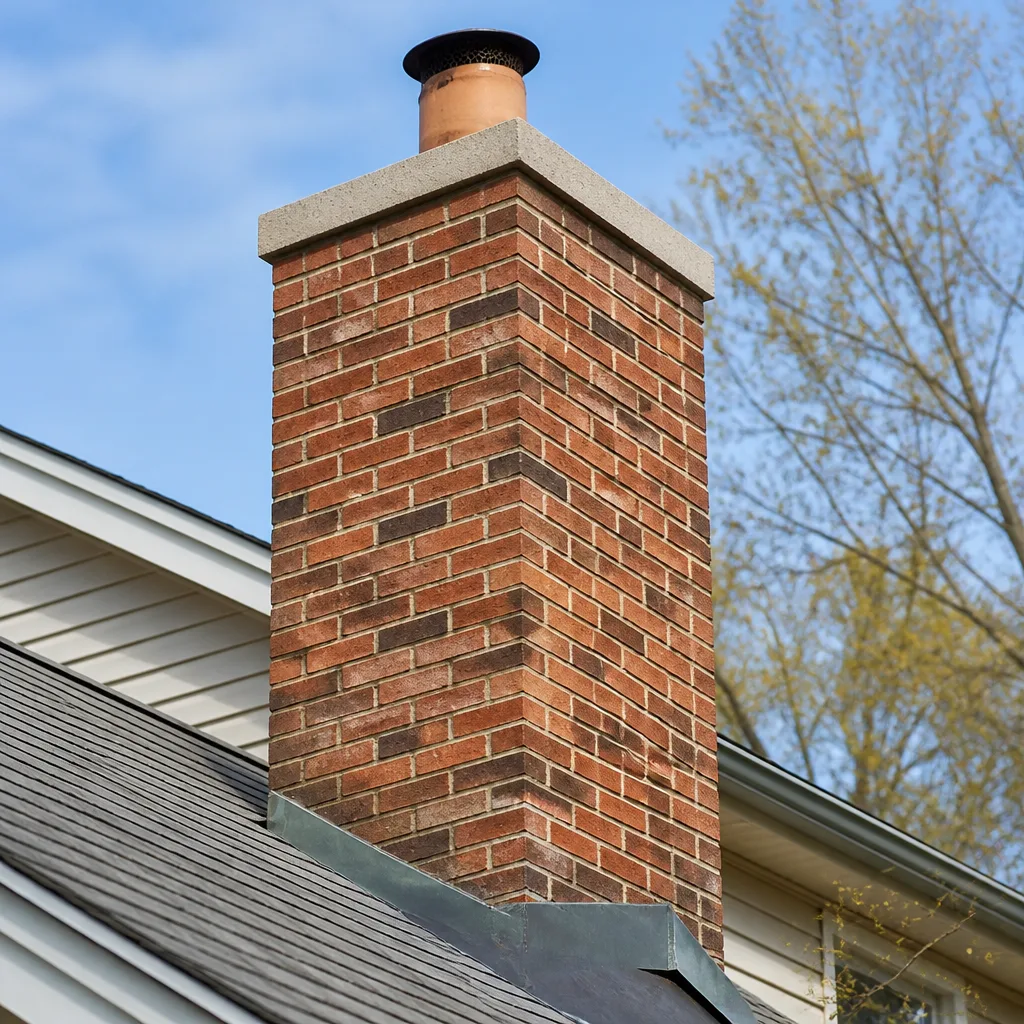 Masonry repair
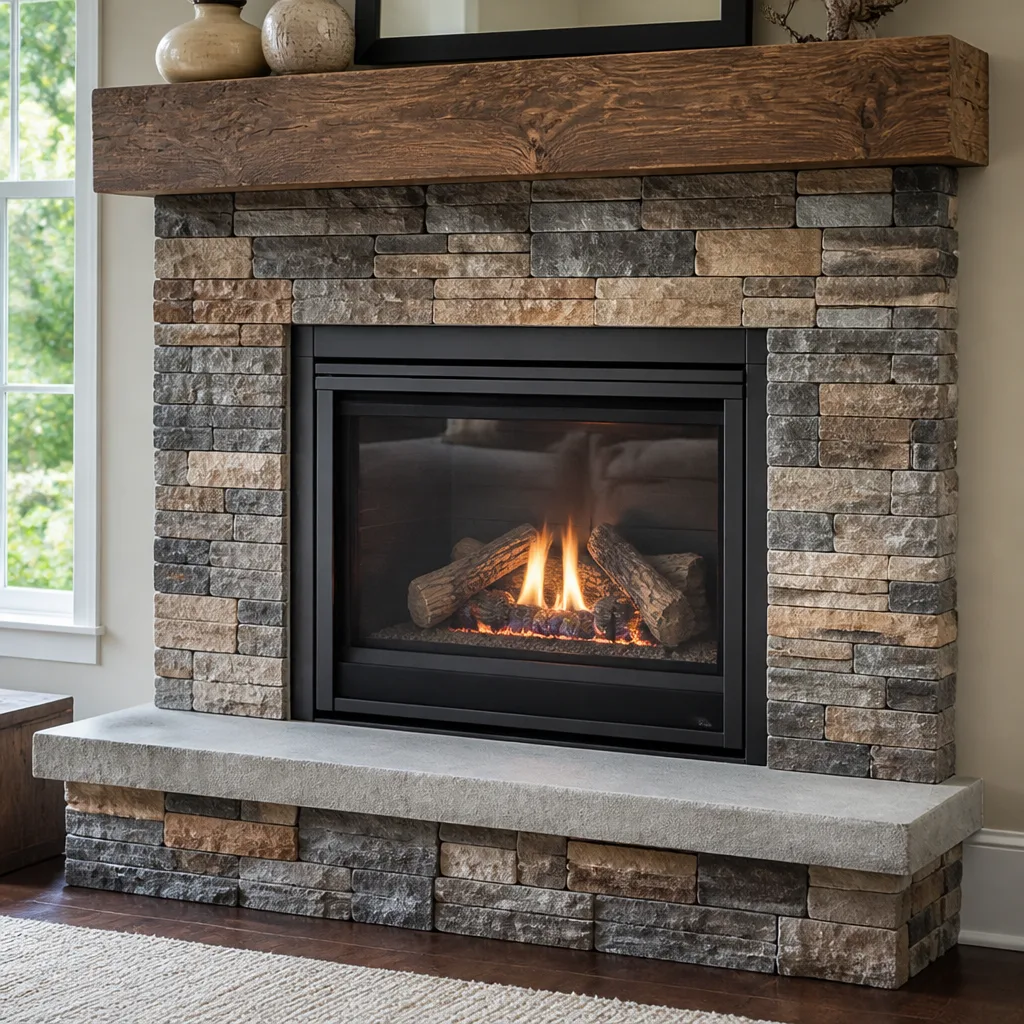 Gas fireplace service
Level 1 sweep and inspection to the NFPA 211 annual standard - flue, crown, cap, and flashing checked and photographed
Chimney sweep logs do not sweep chimneys. They loosen some creosote - which then falls where a brush and vacuum still have to collect it.
Chimney Sweep Maintenance Checklist for Vallejo Homeowners
“Get it swept once a year” is advice written for climates that aren’t Vallejo. A home that burned ten cords of oak through a wet winter and a home that lit three fires all season don’t need the same maintenance timeline, and treating them the same wastes money on one end or invites a chimney fire on the other. What actually works is a checklist tied to real triggers: fog season, the first fire of fall, any felt earthquake, the last fire of spring, and any time a chimney odor shows up. This guide gives you that framework, task by task, with a clear line between what you can check safely yourself and what needs a camera and professional access. You’ll finish knowing exactly what your Vallejo chimney needs, and when.
Quick Answer
A Vallejo homeowner should check the chimney exterior at the start of fog season, book a professional sweep and camera inspection before the first fire of fall, re-inspect after any felt earthquake, and do a post-season review each spring. Cleaning intervals should match how much wood you actually burn, not a fixed calendar date. Anything involving the flue interior, the cap at height, or the firebox masonry belongs to a trained technician.
Styles & brands we work with
- Sweep & inspection
- Caps & crowns
- Flue relining
- Masonry repair
- Gas fireplace service
Table of Contents
- Why a Calendar-Based Schedule Misses the Mark in Vallejo
- The Five Triggers That Set Your Maintenance Schedule
- Exterior Checks: What Vallejo Weather Does to a Chimney
- Interior Checks You Can Safely Do Yourself
- What Requires a Camera and Professional Access
- What to Photograph and Log Each Season
- How to Track Fuel Type and Burn Frequency
- Common Mistakes to Avoid
Why a Calendar-Based Schedule Misses the Mark in Vallejo
Most chimney advice assumes a cold-winter climate with a long, steady burn season. Vallejo doesn’t work that way. Winters here are mild, so many households burn in bursts: a stretch of damp evenings in December, a few weeks of steady fires in January, then nothing until the fog rolls back in. Others run the fireplace almost daily from November through March. Those two homes build up creosote at completely different rates, and a schedule that ignores the difference is guessing.
There’s a second factor. Vallejo sits where damp air settles in through the cooler months, and that moisture interacts with masonry and metal in ways dry-climate chimney advice never addresses. Brick and mortar hold moisture. Metal caps and screens collect debris that stays wet. A chimney that looked fine in August can show real problems by February.
So this checklist is organized around events, not months. Each section below answers one question: what should you check, and when, because of something that actually happened? That’s the framework our technicians use when they walk a Vallejo property, and it’s the one that catches problems early enough to fix them cheaply.
The result is fewer unnecessary sweeps, no missed inspections, and a written record that means something if you ever need it. If you’d rather hand the whole thing to a professional, our chimney sweep service covers inspection, cleaning, and repair in one visit.
The Five Triggers That Set Your Maintenance Schedule
Every task in this guide hangs off one of five recurring events. Learn these and you’ll never wonder when to schedule anything again. Write them somewhere visible, or better, log them in the maintenance record we describe later in this guide.
- Fog season begins. When the damp air settles in for the cooler months, walk the exterior and confirm the cap, screen, and flashing are sound. Moisture is the enemy here, and this is when it starts working on your chimney.
- Before the first fire of fall. This is your professional sweep and camera inspection. Do it before you light anything, so you’re not discovering a blocked flue with a fire already going.
- After any felt earthquake. Even a light shake can crack mortar joints, shift a cap, or open a gap at the flashing. Inspect the exterior the same week you feel one, and have the interior checked before your next fire.
- After the last fire of spring. A post-season review catches what a winter of burning left behind: creosote buildup, soot on the damper, debris in the firebox. Clean and close up properly so the off-season doesn’t make things worse.
- Any time you notice chimney odor. A smoky smell in the firebox on a warm day, or a draft that pulls the wrong way, is a trigger on its own. Don’t wait for a scheduled date; get it looked at.
One more practical note: the fire safety community’s long-standing rule of thumb is that a chimney should be inspected annually and swept when there’s roughly an eighth of an inch of creosote buildup. That’s a useful floor, but it’s not a ceiling. In a mild climate like Vallejo’s, the annual inspection matters more than the annual sweep, because it’s the inspection that tells you whether the sweep is even needed.
Exterior Checks: What Vallejo Weather Does to a Chimney
Vallejo’s damp, foggy months are the main driver of exterior chimney wear. You don’t need to climb anything to catch most problems. Stand back with binoculars, and look at the same things a technician looks at, in this order.
Mortar joints and brick
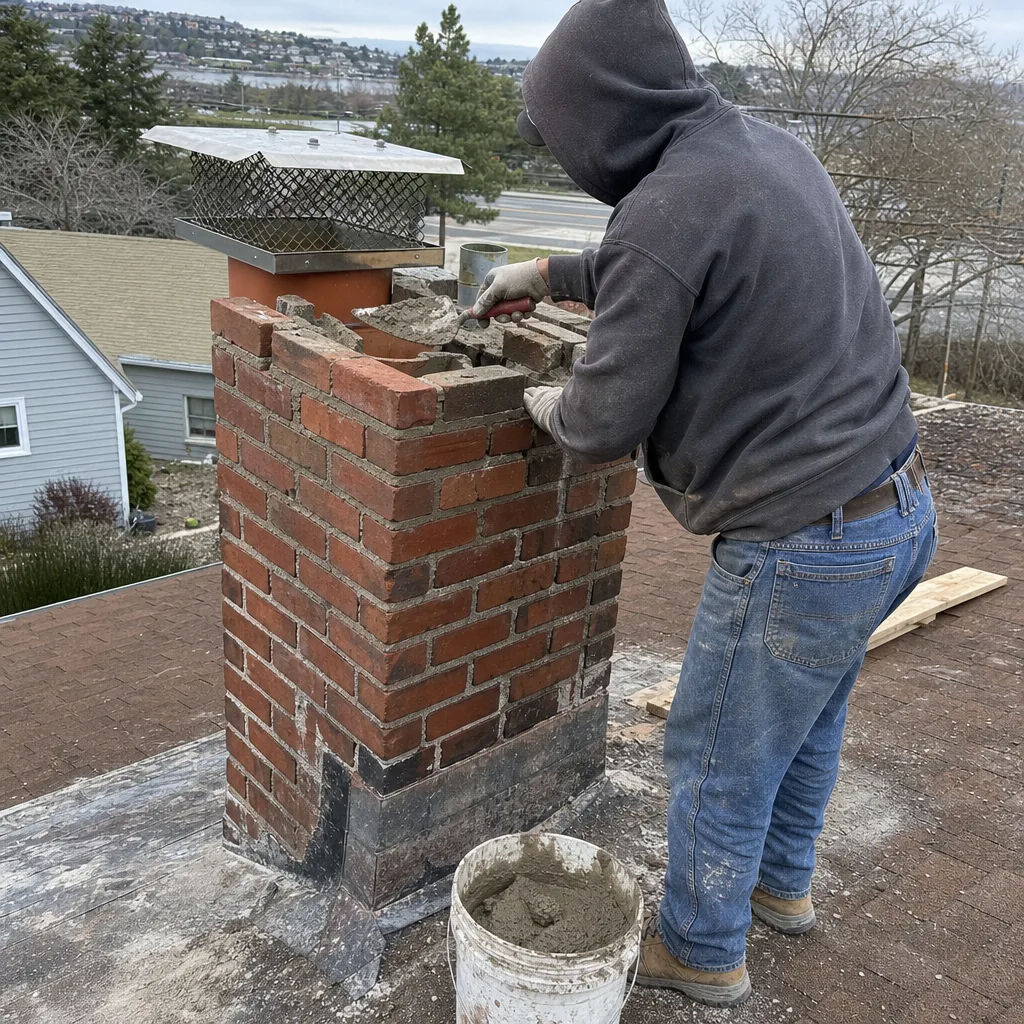
On older brick chimneys, mortar is the weak point. Look for joints that have crumbled, receded, or turned sandy between the bricks. Any brick that’s spalling (flaking or crumbling at the face) or displaced is worth flagging. Hairline cracks aren’t automatically urgent, but cracks that widen, or that run diagonally through several courses of brick, call for a closer look. After any felt earthquake, this is the first thing to check.
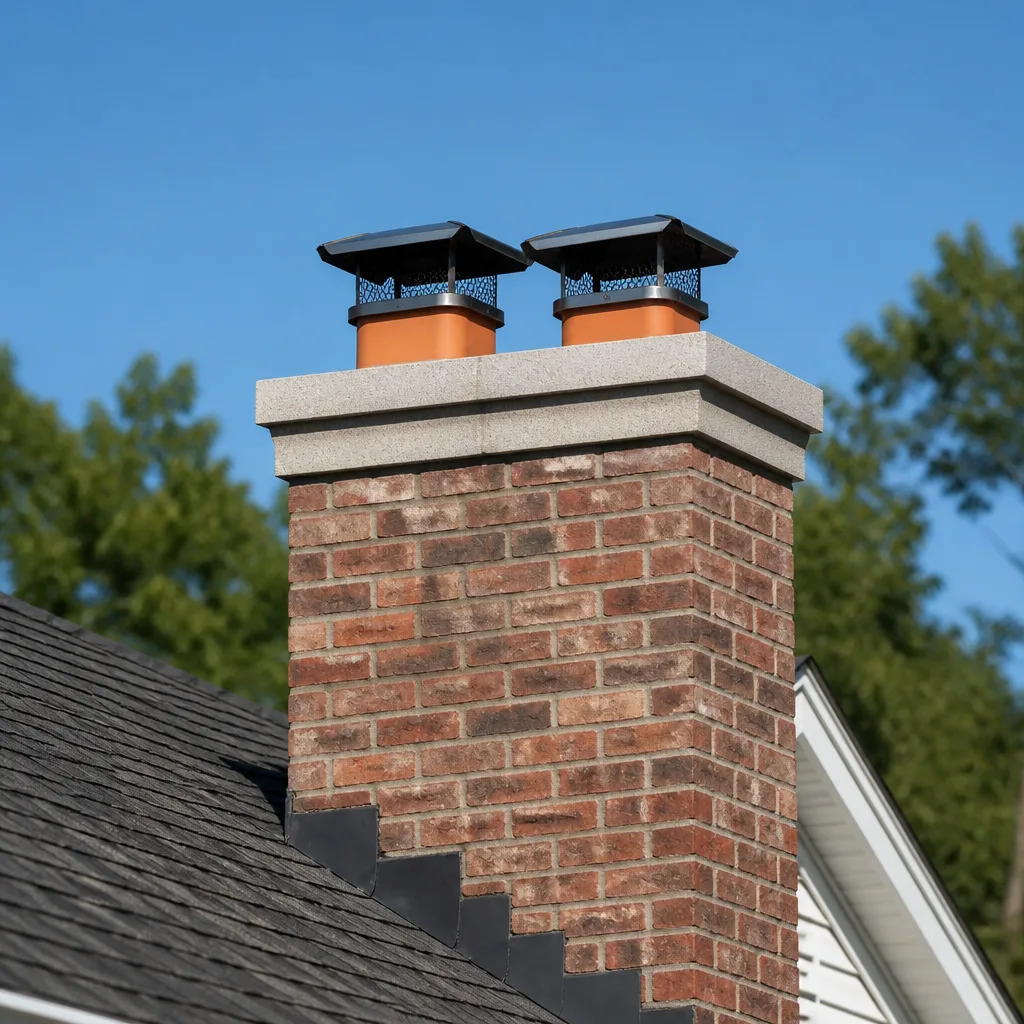
Caps, screens, and debris
A chimney cap keeps rain, birds, and debris out. Look for a cap that’s loose, dented, or missing its screen, and for screens packed with leaves or nesting material. Clogged screens restrict draft and can let smoke back into the house. Where foliage sits close to the flue, expect more of this during and after the wet season. If your cap or screen is due for replacement, our technicians work with code-compliant components from Gelco and Famco, matched to your flue type.
Flashing and the chimney-to-roof joint
Flashing is the metal where the chimney meets the roof. Look for lifted edges, rust, or gaps where water could get in. Anywhere flashing is failing, water follows it into the attic and the framing. This is one of the most common and most preventable exterior problems in Vallejo homes, and it’s cheap to fix early.
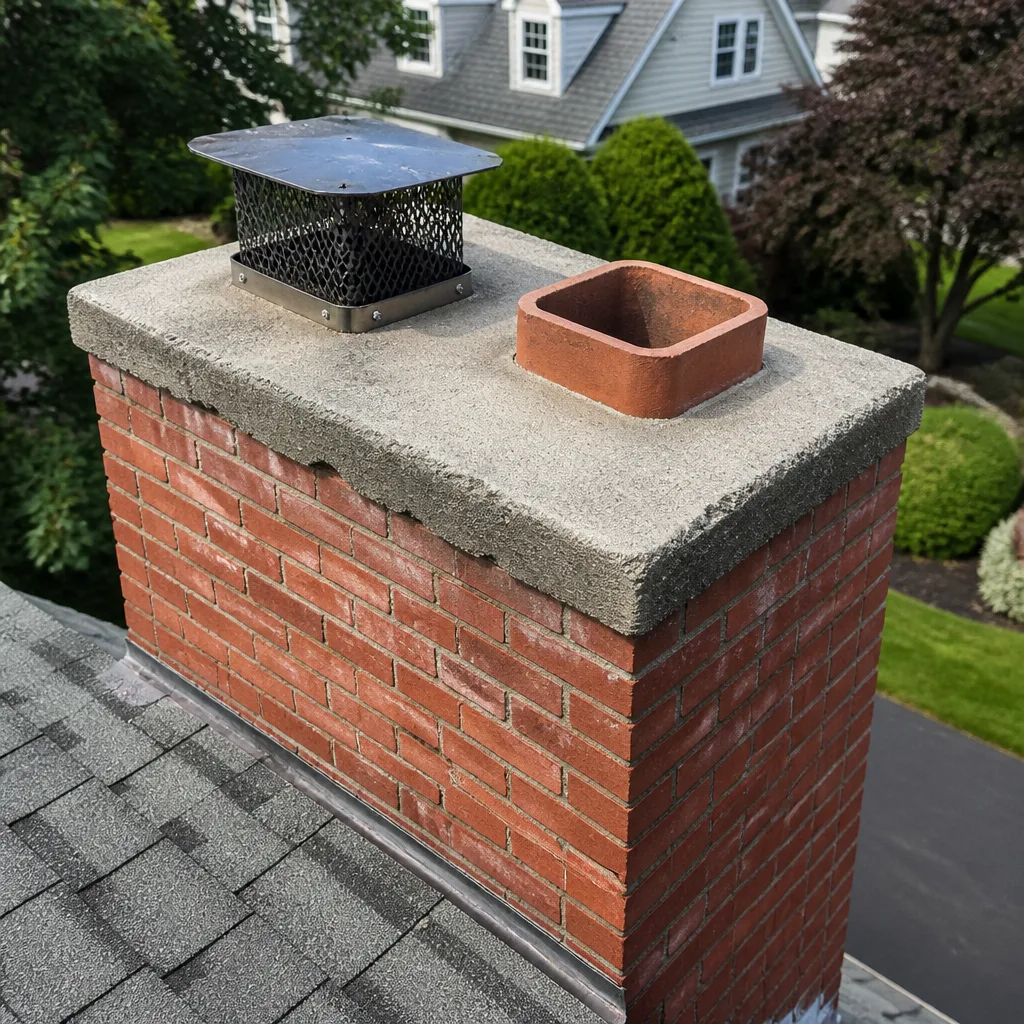
Crown
The concrete crown at the top of the chimney should shed water away from the flue. Look for cracking or a crown that’s pulling away from the brick. A cracked crown lets water into the masonry below, which is where the slow, expensive damage begins.
Write down what you see each fog season. Comparing this year’s photos to last year’s tells you whether a hairline crack is stable or growing, and that record is just as useful as the inspection itself.
Interior Checks You Can Safely Do Yourself
There’s a clear line between what a homeowner can check safely and what needs a trained technician. Stay on the safe side of that line and you’ll catch problems early without putting yourself at risk. Here’s what’s reasonable to do yourself, between professional visits.
- Open the damper and look up. With no fire and a cold firebox, confirm the damper opens and closes smoothly, and look up into the flue for obvious blockages: bird nests, leaves, or a fallen cap screen. As far up as you can comfortably see with a flashlight, nothing more.
- Check for smoke-back. The first fire of the season is your draft test. Light a small fire and watch whether smoke pulls up or curls back into the room. Strong, even draft is what you want; persistent smoke-back is a trigger to call.
- Inspect the firebox. Look for loose or crumbling mortar in the firebox joints, and any cracked firebrick. This is a visual check only. Don’t chip, scrape, or attempt to repair firebox masonry yourself.
- Watch the smoke and smell. Notice whether smoke leaves cleanly or lingers, and whether the chimney smells smoky or sour when it’s not in use. Both are diagnostic clues worth writing down.
- Check the hearth and clearances. Confirm the hearth is intact and that nothing combustible sits close to the firebox opening or in the fire’s path.
What you should not do: reach into the flue above arm’s length, climb onto the roof, or take apart a firebox or damper assembly. Anything above the visible firebox, anything at height, and anything behind a wall or in a flue that runs through the structure needs a camera and professional access. A camera inspection is the only way to see the full length of a flue, and it’s the only honest basis for a repair recommendation.
What Requires a Camera and Professional Access
A flashlight and a mirror catch maybe the first couple of feet of a flue. Everything past that, and everything hidden in the structure, needs a professional camera. Here’s what falls on that side of the line, and why it matters.
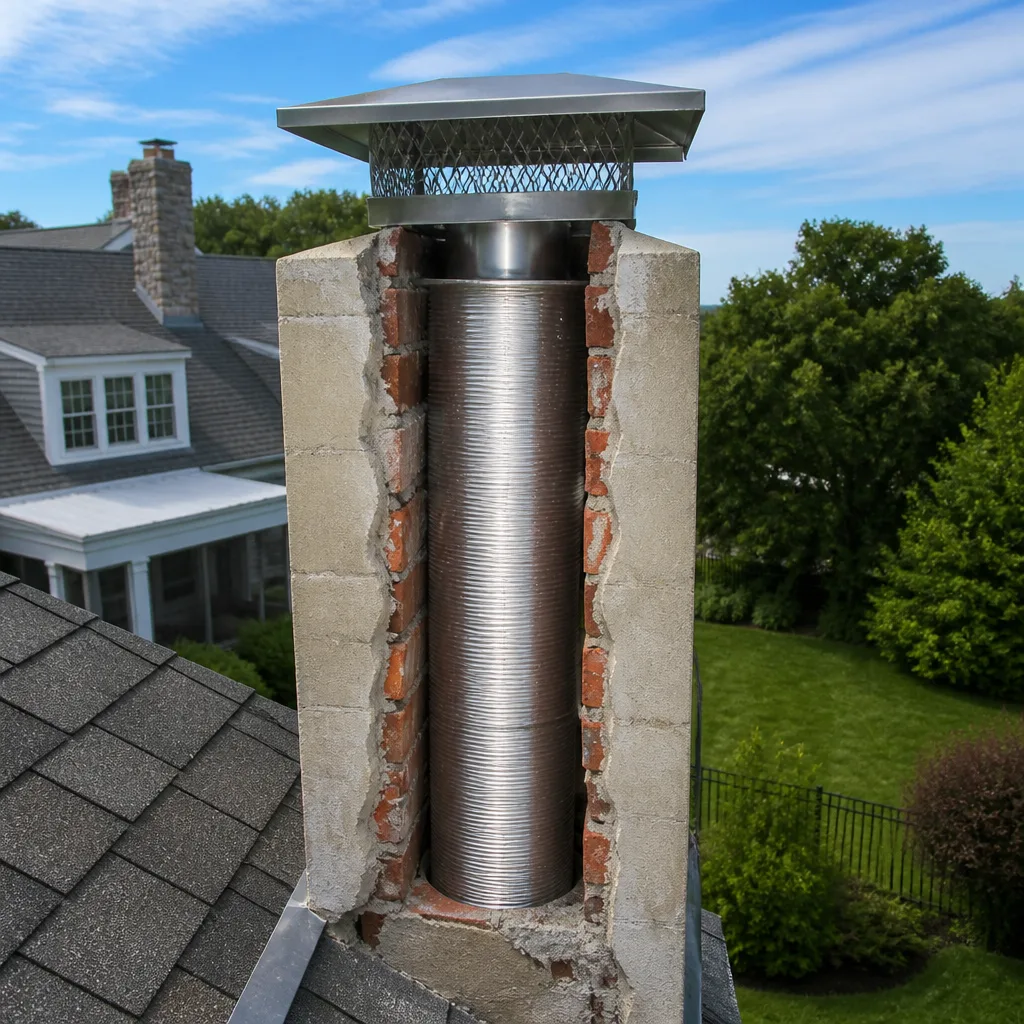
- The full flue interior. A camera run through the flue shows the actual condition of the liner surface, the degree of creosote buildup, and any gaps, cracks, or separated joints. This is where most real problems show up, and where a sweep builds an honest picture of the chimney.
- Liner integrity. A damaged liner is a serious issue: it’s what separates combustion gases from the wood framing in the walls and attic. Camera inspection is the only reliable way to know if a liner is sound.
- The cap, from above. A technician at the roof sees the crown, cap, screen, and flashing at a working angle. This is where a homeowner’s binocular check gets confirmed or corrected.
- Creosote removal. The kind of creosote that hardens into a glazed layer on the flue wall can’t be removed with a brush alone. It needs a trained approach, and evaluating it is part of the professional sweep.
- Any repair decision. The recommendation to repair or replace a liner should be based on what the camera actually shows, and you should be shown the evidence before anything is decided. That’s a core part of how we work: nothing is recommended without camera evidence you can see for yourself.
For a full flue that runs through a tricky path, a flexible liner system may be the right approach. Our technicians work with DuraFlex and Olympia Chimney liner systems for that kind of retrofit. Where a liner surface has deteriorated but isn’t breached, we can often resurface the flue with HeatShield instead of replacing it, which restores the flue and can save on the cost of full replacement. In our experience, a lot of liner replacement gets recommended when resurfacing would have done the job, and the camera evidence is what tells the two apart.
One safety note, and it’s a serious one. Anything involving the flue, the firebox, gas connections, or a professional at height carries real risk. Don’t attempt to clean, repair, or disassemble any of it yourself. A trained technician is the right call every time.
What to Photograph and Log Each Season
A maintenance record is only as good as the evidence in it. Photograph and log the same set of items every season, the same way, so your record builds into something that actually matters if you ever file an insurance claim or sell the home.
- Exterior photos from the same spots. Pick a few standing positions that give a clear view of the chimney from the ground, and shoot from those positions every fog season. Add close-ups of the crown, cap, and flashing wherever you can get them safely.
- Firebox and hearth photos. Document the firebox interior and the hearth before and after each burn season. This is your record of what the masonry looked like and whether anything changed.
- Date, trigger, and action. For every entry, note the date, what triggered the check (fog season, first fire, an earthquake, an odor), what you found, and what you did about it.
- Professional reports. Keep every camera inspection report, photo set, and written estimate. A technician’s photos of the flue interior are the strongest evidence you’ll have if a claim or a repair dispute ever comes up.
- Repair and service records. Note the date, what was repaired, and which components were used. If a cap was replaced with a Gelco component, or a liner resurfaced with HeatShield, that record helps anyone who inspects the chimney later understand its history.
Keep the record in one place: a folder on your phone and a physical folder in the house. The point isn’t bureaucracy. It’s that when a technician asks what’s been done to this flue, you’ll have an accurate answer instead of a guess.
How to Track Fuel Type and Burn Frequency
Creosote buildup depends on what you burn and how often. Your sweep can calibrate cleaning intervals to your actual usage, but only if you give them the data. That’s what a fuel log is for, and it takes less time than reading this section.
Each time you start a fire, log four things in a notebook or notes app:
- The date and roughly how long you burned. A two-hour evening fire and a full day of burning are different events.
- What you burned. Seasoned hardwood, softwood, manufactured logs, or a mix. Softwood and unseasoned wood build up creosote faster.
- How you ran it. A hot, open fire and a smoldering, dampered-down fire behave very differently. Smoldering fires produce more creosote.
- Anything unusual. Smoke-back, an odd smell, a strange sound, or a weak draft. These are the clues a sweep needs.
Bring the log to your next appointment. A technician who knows you burned six cords of seasoned oak versus a household that lit a dozen fires can set a cleaning interval that fits, rather than defaulting to “once a year.” For homes that burn heavily, the interval may be shorter. For light users, a professional inspection each year with a sweep only when needed is the more honest approach. That’s the sort of straight answer we try to give every Vallejo homeowner who calls us.
While you’re at it, keep your dryer vent in the maintenance picture too. Lint buildup in a dryer vent is a fire hazard in its own right, and our dryer vent cleaning service handles it as a core part of venting safety, not an afterthought.
What Happens When You Call for Service
If a check turns up something that needs attention, here’s what a visit looks like. We book a sweep and inspection, and our technicians (up to 15 years of experience between them) run a camera through the flue, check the exterior at the roof line, and give you what they found in plain language. No mystery diagnosis. You see the camera evidence, and you get a written estimate before any work begins. If it’s clean, we tell you so, and tell you when to come back. If a repair is needed, we quote it in writing and explain the options, including resurfacing with HeatShield where that saves you a full liner replacement. For repairs elsewhere in the venting system, we use code-compliant Gelco and Famco components matched to your flue. The whole point of a single-provider approach is that the person who inspected your chimney is the one who can fix it, without a second contractor and a second appointment.
Call (844) 320-2881. We answer 24/7, and fast dispatch runs from 7am to 7pm, Sunday through Friday. Estimates are free, and the price is set per job by the written estimate.
Common Mistakes to Avoid
- Sweeping on a fixed calendar date. A schedule that ignores how much you actually burn is guessing. Track your fuel log so your sweep can set the interval to your usage, not a generic “once a year.”
- Skipping the post-earthquake exterior check. In Vallejo, a felt tremor is a real trigger. Cracks in mortar or a shifted cap don’t wait for fog season, and a small crack found early is cheap to fix.
- Taking a failed crown or flashing lightly. Those are the paths that let water into the masonry and framing. A cheap repair now prevents a structural one later.
- Ignoring a chimney odor. A smoky smell on a warm day is a draft or blockage signal, not a quirk. It’s a trigger to get the chimney looked at, not to live with it.
- Trying to clean the flue yourself. The camera run and creosote removal require professional access and training. Reaching into the flue or climbing the roof is how injuries happen.
- Not documenting anything. Without photos and a written record, every inspection starts from zero. Keep the record, and it pays off if you ever file a claim.
- Letting a sweep-only shop skip the camera. If a technician never shows you the inside of your flue, you have no way to verify a liner recommendation. Ask for the camera image, and expect to see it.
See the difference
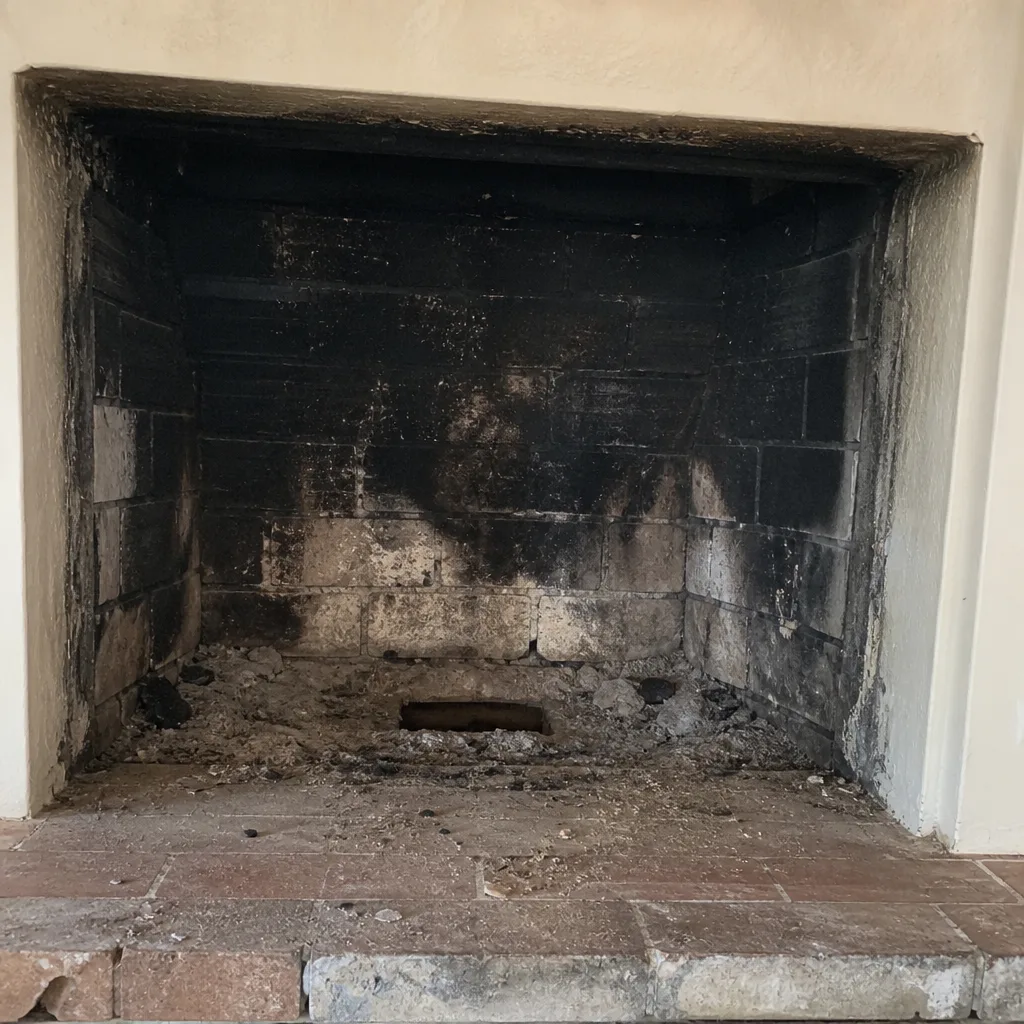 Before
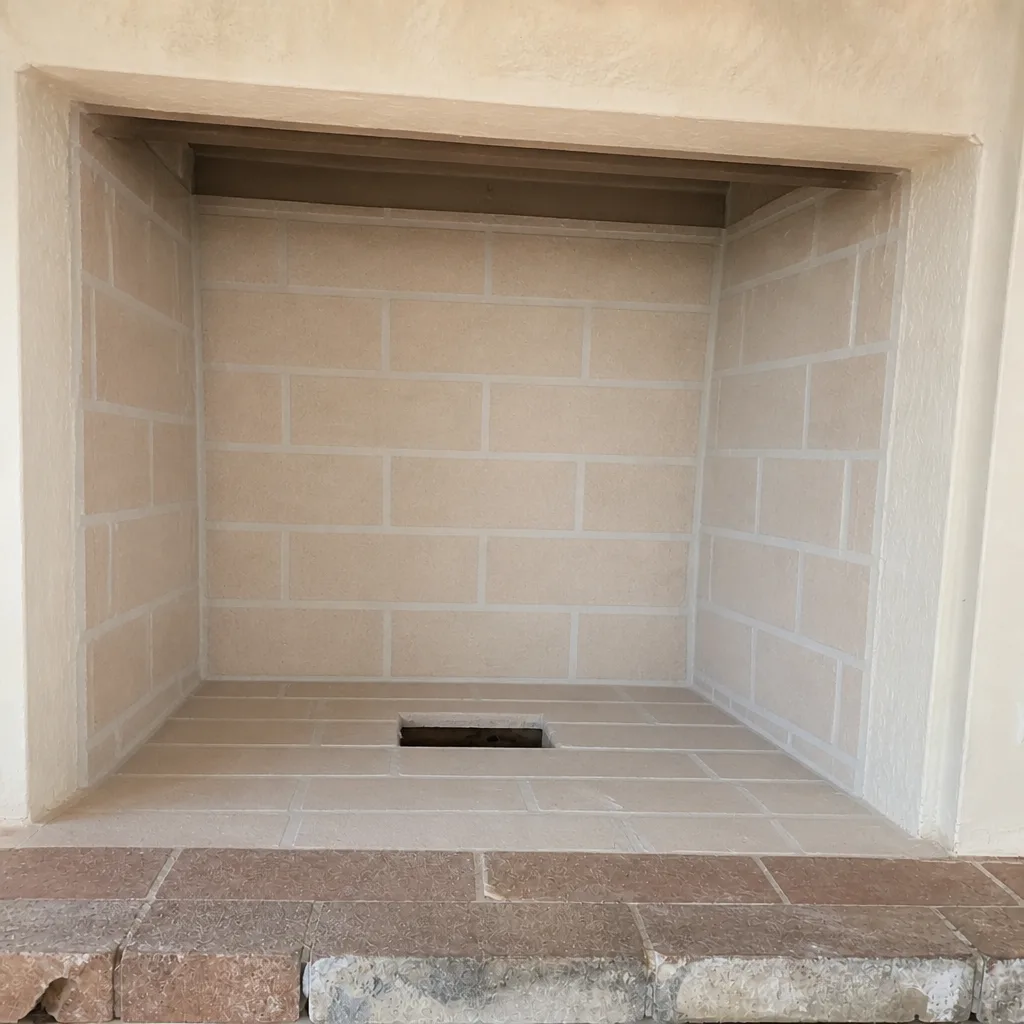 After
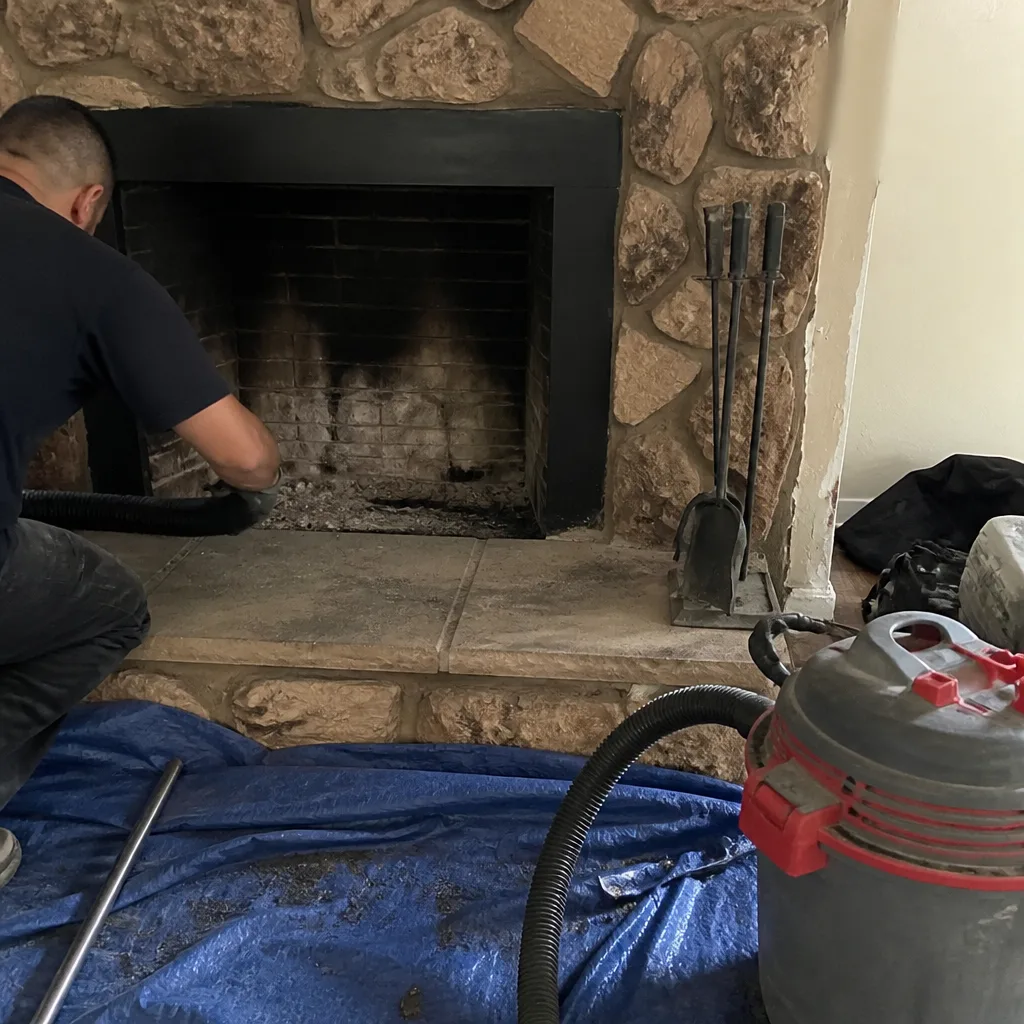 Before
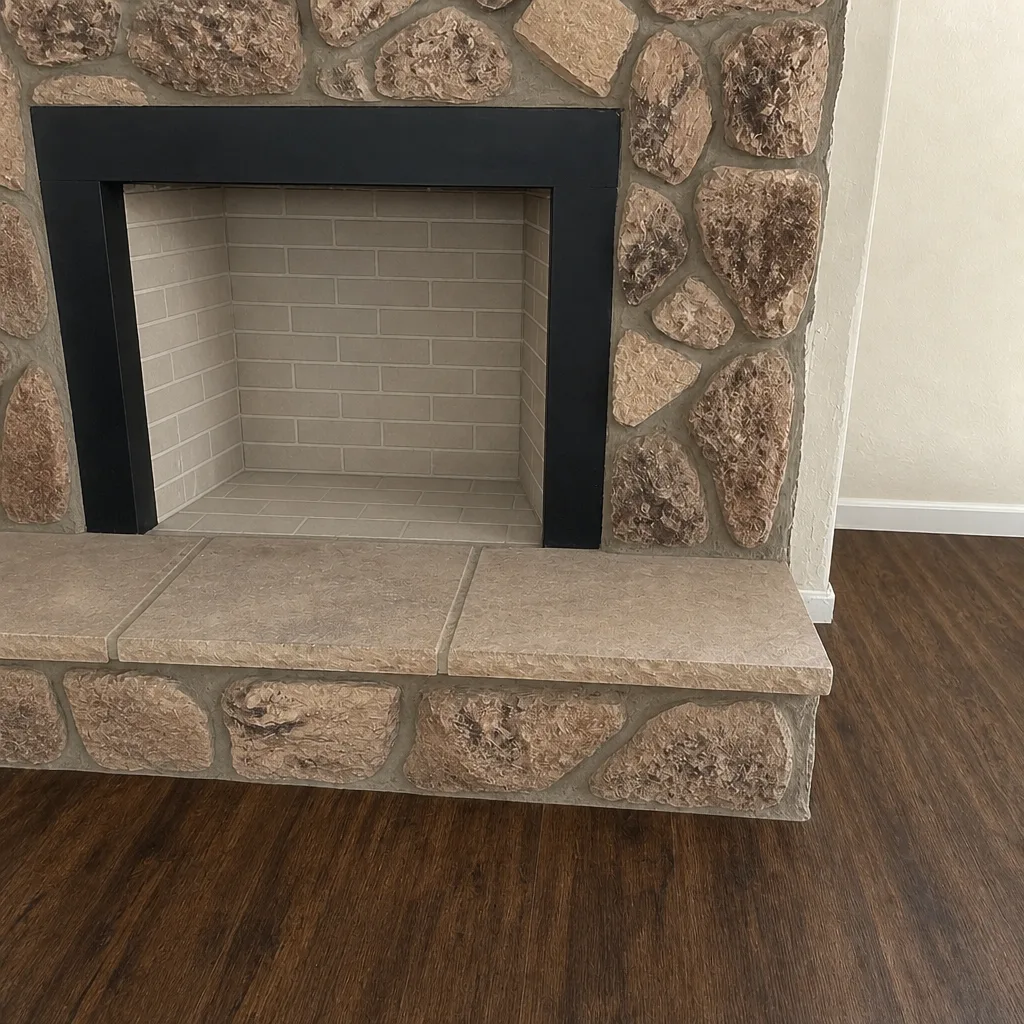 After
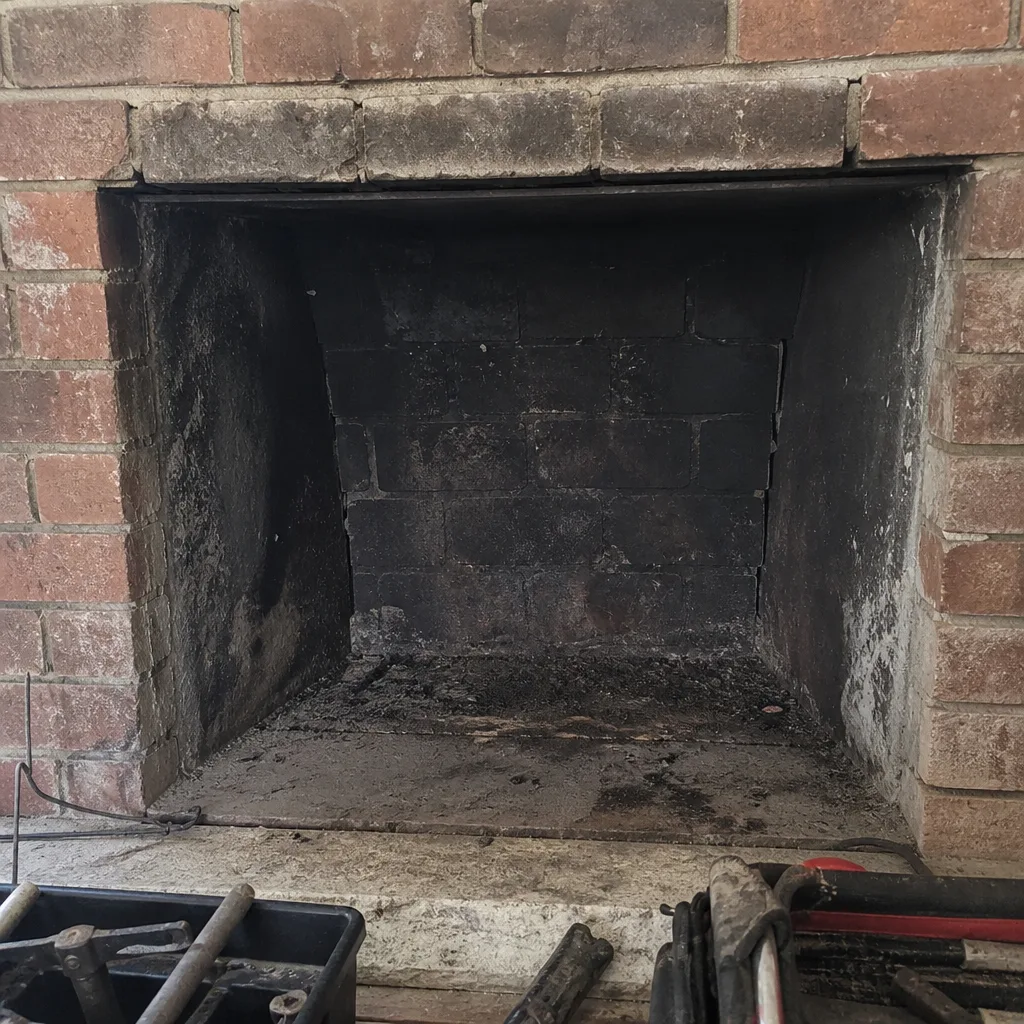 Before
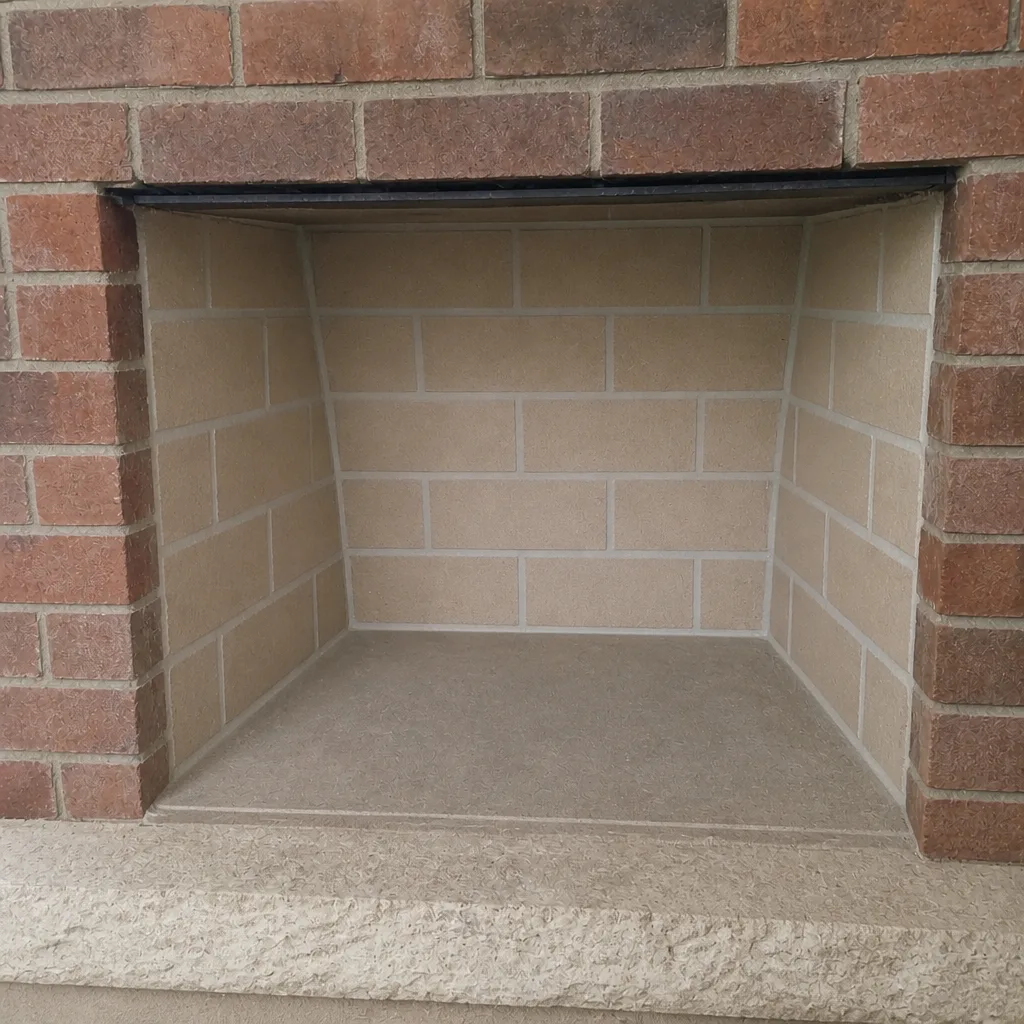 After
When to Call a Professional
Call a professional if you’ve never had the chimney inspected, if it’s been more than a year, or if the last fire of the season left heavy soot or a smoky smell behind. Call right away if you smell smoke-back on a fire, notice a cracked or displaced crown, find a loose cap, or feel an earthquake and want the exterior checked. Call before your first fire of fall if you’re not sure when the flue was last cleaned. And call if any technician ever recommends a liner replacement without showing you the camera evidence; you deserve to see what they see. Chimney Sweep Vallejo offers free estimates in Vallejo. Call (844) 320-2881, and we’ll tell you exactly what we found and exactly what it needs.
Frequently Asked Questions
At minimum, a chimney should be inspected once a year, and swept when creosote buildup warrants it. In Vallejo’s mild climate, the inspection is the important part; a home that burns a few fires a season may go years between sweeps, while a heavy burner may need annual cleaning. Track your fuel usage so the recommendation fits your actual burn rate, not a fixed date.
Yes, the safe, visible checks are yours to do: open the damper, look up as far as you can comfortably see, watch for smoke-back, and inspect the firebox from the outside. Anything above the visible firebox, anything at roof height, and the full flue interior need a camera and professional access. Don’t reach into the flue or climb the roof.
Walk the exterior the same week and look at the mortar joints, the cap, and the flashing where the chimney meets the roof. A felt tremor can open cracks or loosen components that weren’t visible before. If anything looks different from your last photo, get it inspected before your next fire.
Yes, if you want an honest answer about your flue. A camera shows the full length of the flue and the condition of the liner, which a flashlight can’t reach. It’s also the only basis for a repair recommendation you can verify. Ask to see the camera image before any liner work is decided.
A smoky or sour smell on a warm, still day is usually a draft signal or leftover creosote and soot. The firebox may be drawing the wrong way, or there may be a partial blockage. Treat an odor as a trigger to get the chimney looked at, especially if it appears without a fire burning.
It can when the sweep is also a repair-capable shop. Our technicians handle cleaning and repair in one visit, using professional-grade DuraFlex, HeatShield, Gelco, Olympia Chimney, Famco, and Copperfield components, so you don’t have to coordinate a second contractor for a cap, a liner, or a resurfacing job. Ask any sweep you hire whether they can fix what they find.
The Bottom Line
A maintenance checklist for a Vallejo home isn’t a list of dates; it’s a set of triggers. Fog season starts the exterior checks. The first fire of fall brings the professional inspection. Any felt earthquake prompts a fresh look at mortar, cap, and flashing. The last fire of spring triggers a review and a clean-up. Any smell or smoke-back means call. Document everything, log your fuel use, and let a camera be the basis for any repair decision. Do that, and your chimney will be held to a standard that matches how you actually use it, in the climate Vallejo actually has. Call (844) 320-2881 and we’ll show you what we find.
Written by the team at Chimney Sweep Vallejo.