
Last updated November 15, 2026
 Sweep & inspection
 Caps & crowns
 Flue relining
 Masonry repair
 Gas fireplace service
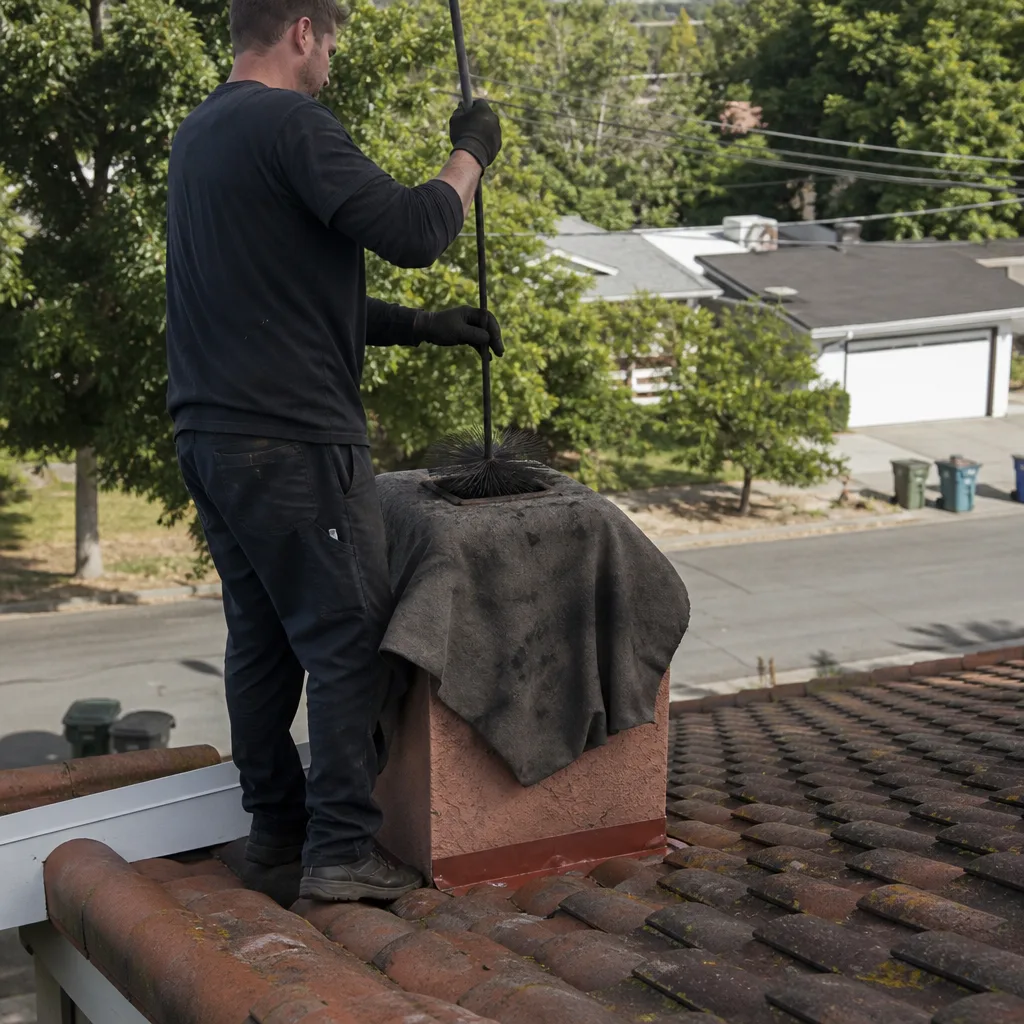
Level 1 sweep and inspection to the NFPA 211 annual standard - flue, crown, cap, and flashing checked and photographed
Chimney sweep logs do not sweep chimneys. They loosen some creosote - which then falls where a brush and vacuum still have to collect it.
Chimney Sweep Troubleshooting in Vallejo: Common Problems and How to Fix Them
If your chimney smokes into the room only on cold mornings but drafts fine after 20 minutes, that isn’t a dirty flue. That’s a cold-stack problem, and sweeping it won’t solve anything. Most chimney complaints Vallejo homeowners bring us fall into a handful of patterns, and nearly all of them can be read from the symptoms before anyone climbs on a roof. Smoke rollback, lingering odors, a fire that sulks instead of burning: each one points to a specific cause, and knowing which one you have keeps you from paying for the wrong fix. This guide walks through how to diagnose your chimney by symptom, what each creosote stage smells like, and when a sweep is the answer versus when repair is.
Quick Answer
Most chimney problems in Vallejo come down to one of four causes: a cold flue that needs warming before it draws, a blockage of creosote or debris, negative pressure created by a tight modern house, or physical damage like cracked flue tiles and washed-out mortar that only repair can fix. A sweep solves creosote and blockage; it does nothing for cold-stack backdraft, pressure imbalance, or structural damage. Match your symptom to the cause before you book any work, and stop using the fireplace entirely if you smell acrid or petroleum-like creosote or see damaged flue tiles.
Styles & brands we work with
- Sweep & inspection
- Caps & crowns
- Flue relining
- Masonry repair
- Gas fireplace service
Table of Contents
- Why does smoke come into the house?
- Cold-stack backdraft vs. blockage vs. negative pressure
- How Vallejo’s marine layer and Bay winds affect draft
- Reading your creosote stage by smell
- Signs a sweep won’t fix it and repair is needed
- When to stop using the fireplace entirely
- A step-by-step symptom checklist
- Lingering odors that aren’t from the firebox
Why does smoke come into the house?
Smoke enters the room when the chimney can’t pull harder than the house pushes back. A flue draws because warm air inside it rises and exits the top, and any condition that cools that column of air, blocks it, or creates a stronger competing pressure inside the house will reverse the flow. That’s the whole principle. Everything else is figuring out which of those three conditions you have.
The three possibilities, in plain terms:
- Cold flue. The air inside the chimney is the same temperature as the outside air, so it has no reason to rise until a fire warms it. This produces smoke on startup that clears once the flue heats.
- Blockage. Creosote buildup, a bird nest, a collapsed tile, or a cap full of debris narrows the flue until it can’t move the volume of smoke the fire produces. This gets worse the longer the fire burns.
- Negative pressure. The house itself is pulling air down the chimney. Bathroom fans, kitchen exhaust hoods, a tightly sealed house, and stack effect in a multi-story home all compete with the flue for air.
Each behaves differently, and the difference tells you what you’re dealing with. A cold flue smokes for a few minutes and then settles. A blockage smokes more the hotter the fire gets. Negative pressure smokes whenever a competing fan runs or the house is closed up tight, regardless of fire size. When we run a chimney sweep in Vallejo, the first thing we establish is which pattern the homeowner describes, because it decides whether cleaning is even the right service.
Cold-stack backdraft vs. blockage vs. negative pressure
These three get confused constantly, and the confusion costs homeowners money. Here’s how to tell them apart before you call anyone.
- Test the cold-stack pattern. Light a rolled newspaper and hold it near the open damper. If smoke drifts up and out within a minute or two and the fireplace then burns cleanly, you have a cold flue. Pre-warming the flue with a small kindling fire before the main fire solves it.
- Check whether it worsens with fire size. If a small fire burns fine but a larger one backs smoke into the room, the flue is restricted. That points to blockage or an undersized flue, not cold air. Stop and get it inspected.
- Run the competing fans. Turn on the kitchen hood and the bathroom fan. If smoke rolls back only when they run, you have negative pressure. Cracking a window a few inches on the same wall as the fireplace often confirms it instantly.
- Check the weather. If the problem appears on windy days and vanishes on still ones, it’s pressure or a draft-affected termination, not creosote.
- Look at the firebox. Soot streaks at the top of the opening and a smoky smell on the face of the fireplace suggest chronic backdraft rather than a one-time event.
Cold-stack and negative-pressure problems are house-and-weather issues, not dirt issues. Sweeping a chimney that smokes from cold air or pressure imbalance just leaves you with a clean chimney that still smokes. This is the single most common misdiagnosis we correct in Vallejo homes, and it’s the reason we walk through symptoms before scheduling a sweep.
How Vallejo’s marine layer and Bay winds affect draft
Vallejo sits where the Bay funnels wind and where the marine layer rolls in to cool the evenings, and both shape how a chimney behaves. The marine layer is the important one. Cool, damp air settles into the flue overnight and in the early morning, leaving the chimney filled with air that’s the same temperature as the sky outside. That air has no thermal lift. When you light a fire into a flue full of cold marine air, the smoke has nowhere to go but into the room until the flue warms. Cold-stack backdraft is a regional pattern here, not a structural defect.
Wind adds a second variable. Vallejo’s position relative to the Bay means wind pressure on the roof changes through the day, and a chimney termination that sits in a pressure zone gets pushed back on more often than one in a calmer spot. A cap or a taller termination helps in some cases; the right answer depends on the roof and the surrounding structures, which is why an on-site look matters more than a phone diagnosis for wind-related symptoms.
Practically, that means:
- Expect more startup smoke on cool, still mornings when the marine layer is thick and there’s no wind to help move air.
- Expect draft trouble on gusty days when wind hits the side of the house rather than the top of the flue.
- Don’t assume a smoky morning means a dirty flue. If it clears after 15 to 20 minutes of burning, the flue was cold, not blocked.
When we look at a Vallejo home, we treat the local weather pattern as part of the diagnosis. A chimney that drafts fine in summer heat and smokes every winter morning is behaving exactly as the climate dictates.
Reading your creosote stage by smell
Creosote passes through recognizable stages, and the smell in the firebox tells you roughly where you are. You can use your nose as a first-layer check before anyone inspects. This isn’t a substitute for a camera look, but it points you toward the right response.
- Musty or earthy smell. Usually first-stage creosote plus some moisture and soot. It’s a normal “needs sweeping” signal. This is the stage where cleaning is straightforward and cheap.
- Acrid, sharp, almost tar-like smell. Second-stage creosote, the crusty, flaky layer that’s harder to remove. This calls for a proper sweep with scraping tools, not a quick brush pass. It’s also the stage to stop burning until it’s cleaned.
- Petroleum-like or solvent smell. Third-stage creosote, the glazed, hardened type. This is the dangerous one and it means stop using the fireplace entirely. A glazed deposit is dense, hard to remove, and represents a real chimney fire risk. It requires a professional before you burn again.
Two things drive creosote stage faster than anything else: burning green or unseasoned wood, and running the fire cool and smoldering with the damper partly closed. A hot, clean fire with dry wood produces less creosote than a slow, smoky one, which is counterintuitive to anyone who thinks a smaller fire is gentler. It isn’t. Cool fires deposit more.
If your nose can’t tell the difference, that’s fine. Our technicians have up to 15 years of experience distinguishing stages on sight and by touch, and the camera confirms it. The point of the smell check is to decide whether you light another fire tonight or wait for service.
Signs a sweep won’t fix it and repair is needed
Sweeping removes deposits. It doesn’t rebuild anything. There are specific physical signs that tell you the problem is structural, and no amount of brushing addresses them.
- Spalling. Flakes of brick or mortar dropping into the firebox or landing on the smoke shelf. The masonry is shedding, which means it’s being affected by moisture or heat cycling.
- Cracked or missing flue tiles. These show up on a camera inspection. A cracked tile lets heat and gases reach the surrounding structure and lets creosote collect in the gaps. This is a repair, not a cleaning.
- Mortar washout. Joints between bricks eroding, often visible as a recessed or sandy line. The chimney is losing structural integrity where it carries the flue.
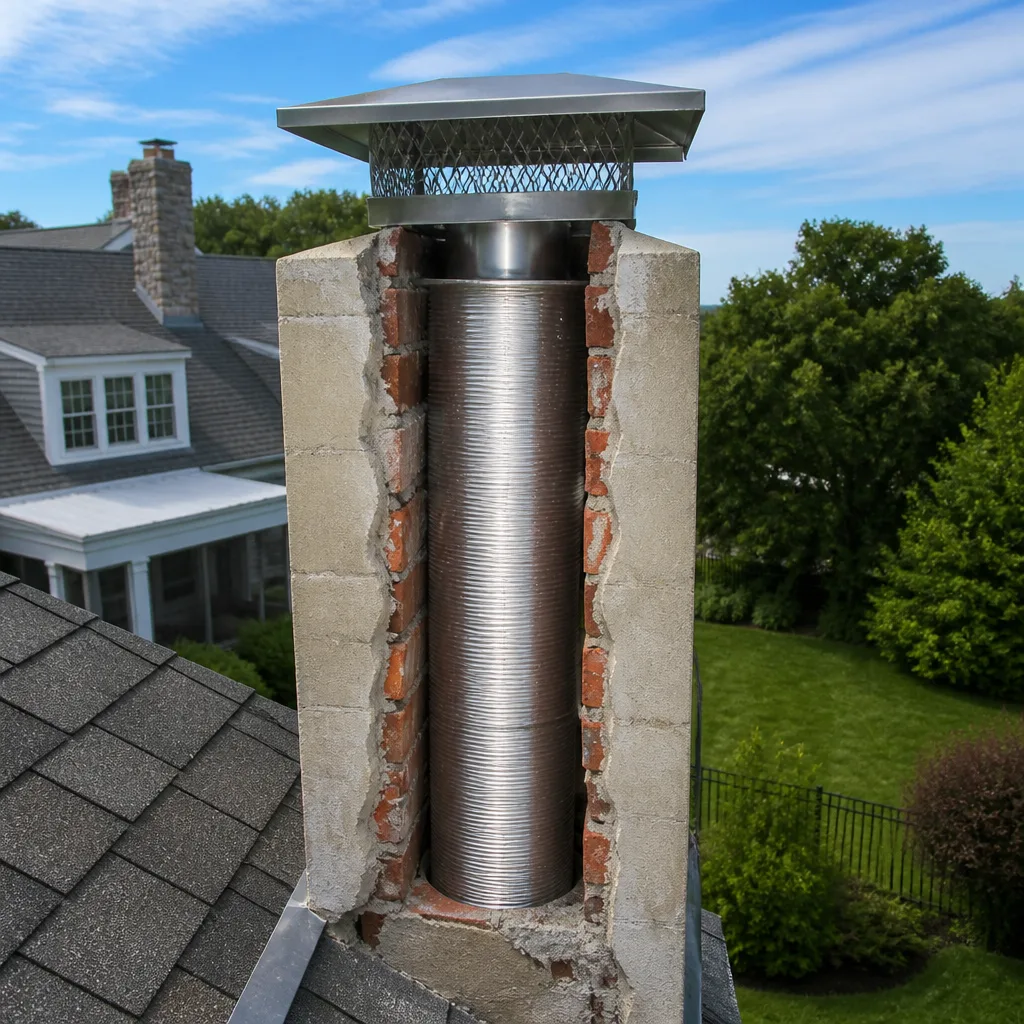
- Deteriorating liner surface. The liner’s inner face flaking or pitting. This is where HeatShield resurfacing comes in. Instead of jumping straight to a full liner replacement, the flue’s failing surface can often be resurfaced and restored. That’s a meaningful cost difference, and most sweep-only operators don’t carry the capability to offer it.
- A crooked or offset flue path. Someolder Vallejo homes have flues that jog rather than run straight. For those, a flexible DuraFlex liner system handles the offset that a rigid liner can’t, and it’s a repair option worth asking about by name.
If your camera inspection turns up any of the above, the conversation shifts from cleaning to repair, and the estimate should reflect that. We tell homeowners exactly what we found and exactly what it needs, and the camera evidence is available for them to see. Nothing gets recommended that they can’t verify for themselves.
When to stop using the fireplace entirely
There’s a clear line between “keep using it while you schedule service” and “stop burning tonight.” Stop immediately if any of the following is true:
- You smell petroleum-like or sharp solvent creosote. That’s third-stage glazed creosote and the fire risk is real. Don’t light another fire.
- You can see cracked or missing flue tiles on a camera view. Heat escape through a crack can affect the surrounding structure.
- Smoke is filling the room even after 20 minutes of burning. Ongoing rollback that doesn’t clear means a blockage or a serious flue restriction, and continuing to burn drives more creosote into a compromised flue.
- There’s a strong burnt or smoky smell in the house when the fireplace is cold. Odors moving through the house when you aren’t burning suggest a leak or backdraft, not just deposits.
If none of those apply, and you have a cold-stack or pressure issue, you can often keep burning with adjustments. Pre-warm the flue. Crack a window near the fireplace. Make sure the damper is fully open. But get it looked at soon, because a draft problem that adds creosote every time you burn works against you over a season.
The same logic applies to a related venting system. If your dryer is taking longer to dry clothes or the vent smells like hot lint, that’s the fireplace-equivalent of a blockage: it keeps working but it’s building toward a fire. We handle dryer vent cleaning as a core service precisely because a plugged dryer vent is a fire hazard, not a housekeeping nuisance.
A step-by-step symptom checklist
Use this checklist before you call anyone. It takes ten minutes and will tell you what kind of problem you’re likely facing, which makes the conversation with any chimney professional much more useful.
- Note when the smoke appears. Cold mornings only, right at startup, or throughout the burn? Startup-only means cold stack. Throughout the burn means blockage.
- Time it. Does smoke clear within 20 minutes? If yes, cold flue. If it never clears, restricted flue.
- Smell the firebox when it’s cold. Musty means first stage. Acrid means second. Petroleum means third, and stop burning.
- Run the kitchen hood and bathroom fan while the fire is lit. If that triggers rollback, you have negative pressure.
- Crack a window a few inches on the fireplace side. If that fixes the draft, pressure imbalance is part of it.
- Shine a light up the flue from the firebox. Look for visible soot buildup, cracked tiles, or blockage. Anything you can’t see needs a camera inspection.
- Check the cap and roof from the ground with binoculars. A missing or clogged cap worsens draft and invites weather damage. If a Famco or Gelco cap replacement is warranted, the fix is straightforward.
When the answers point in different directions, that’s the point at which a professional inspection resolves it. Bring the answers with you and the diagnosis gets fast.
Lingering odors that aren’t from the firebox
Not every chimney smell comes from the fireplace itself. Homeowners in Vallejo sometimes notice an ongoing smoky or chemical odor with no fire lit, and the source isn’t always the flue. Before you schedule a chimney sweep, rule out the other venting paths in the house.
Laundry appliances are the usual culprit. A dryer vent that’s clogged with lint can push warm, moist, linty air back into the house, and the smell resembles “something’s burning” without an actual fire. A dryer vent that’s vented into an attic or crawlspace can leave an ongoing smell throughout the home. That’s a fire hazard and a moisture problem both, and it’s worth checking before you assume the chimney is at fault.
Other sources of “chimney” smell worth ruling out:
- A backdrafting water heater or furnace. These share the same air pressure environment as your chimney. When one backdrafts, another often does too.
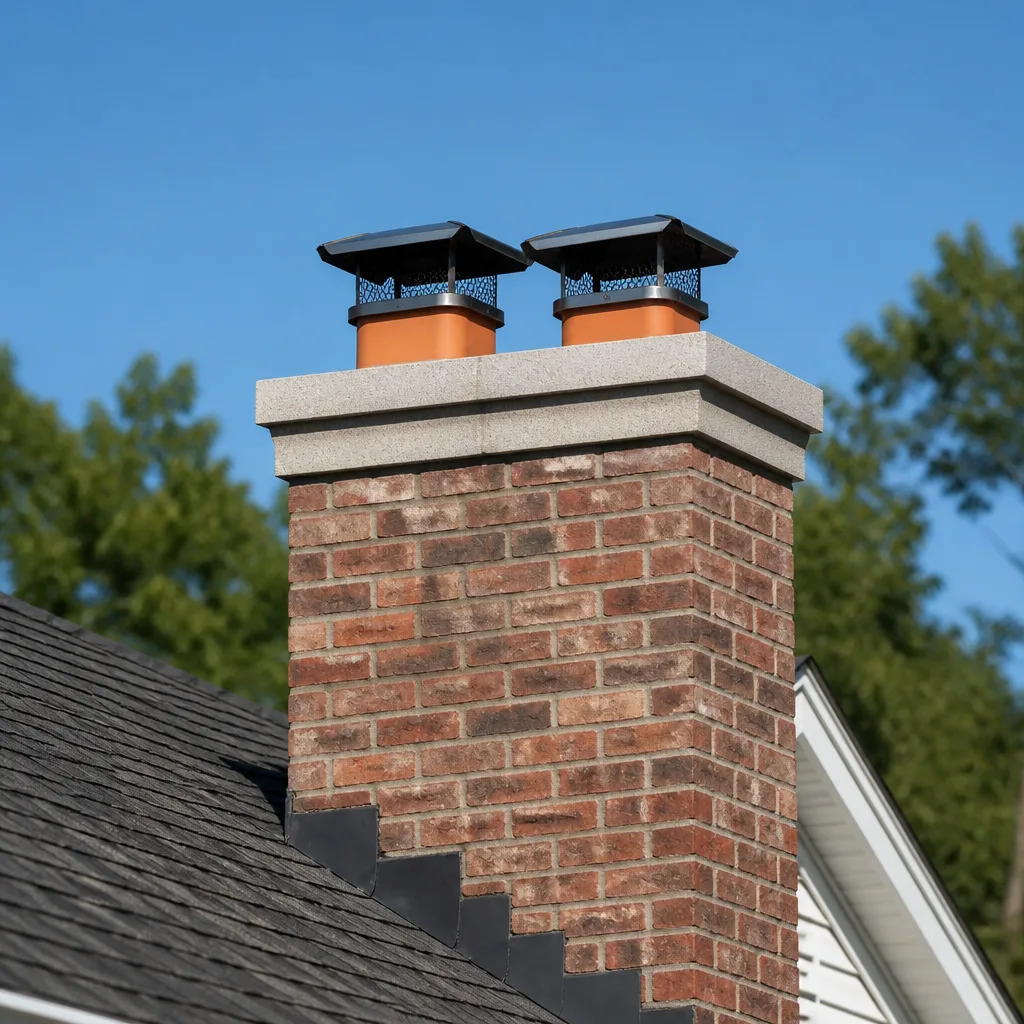
- A blocked or missing chimney cap. An uncapped flue invites rain, birds, and debris, and produces a musty smell when the deposits get wet. A correctly fitted cap eliminates that path.
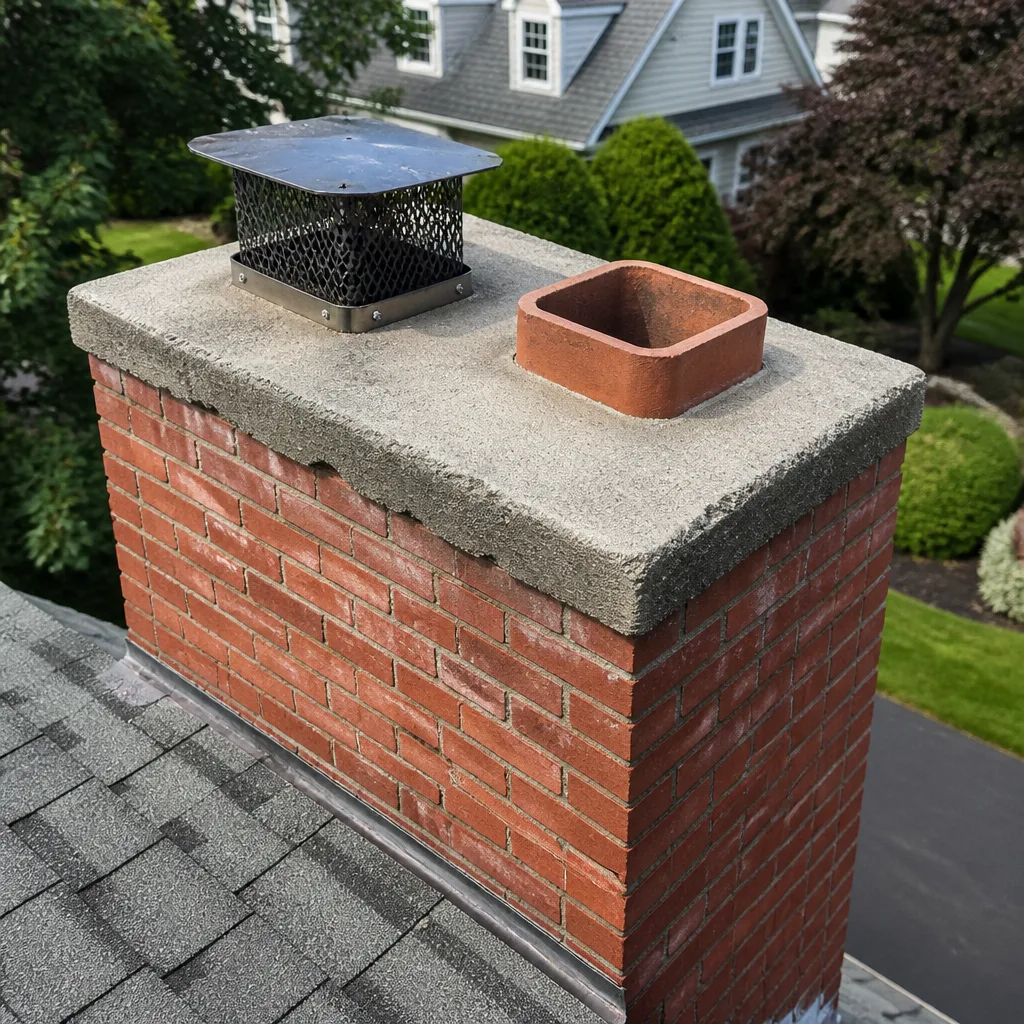
- A leaking chimney crown. Cracks in the crown at the top let water into the masonry, which then smells of damp and old soot. Gelco crown repair products handle this cleanly.
The right sequence: rule out the dryer, rule out the crown and cap, then check the flue. We’ll tell you what we find and what it needs, and we won’t recommend a chimney repair if the evidence points to the laundry room.
Common Mistakes to Avoid
- Booking a sweep for a cold-stack problem. If your chimney smokes for a few minutes and then clears, sweeping won’t change the behavior. The flue is cold, not dirty. You’ll pay for a cleaning that doesn’t fix your complaint.
- Burning wet wood to “get by.” Wood that hasn’t dried properly produces far more creosote than seasoned wood, and it moves you toward second- or third-stage deposits faster. In Vallejo’s damp winter air, wood stored uncovered absorbs moisture and burns badly.
- Ignoring a musty smell after a summer of no burning. That’s often first-stage creosote plus some damp. Small problem now, bigger problem by the end of the season.
- Continuing to burn after the smell turns acrid or sharp. This is the single most common mistake. Second-stage creosote means stop, get it cleaned, and don’t light another fire until it’s done.
- Assuming the fireplace is the source of a strange smell. Dryer vents, water heaters, and cracked crowns all produce chimney-like smells. Diagnose the actual source before booking chimney work.
- Trusting a “sweep” that doesn’t offer any inspection. A pass with a brush without any look at the flue condition leaves cracks, spalling, and liner damage completely unseen. Ask what’s included.
- Going straight to full liner replacement when the liner surface is just worn. HeatShield resurfacing can restore a deteriorating liner rather than replace it, and it’s worth asking about by name before you accept a replacement quote.
See the difference
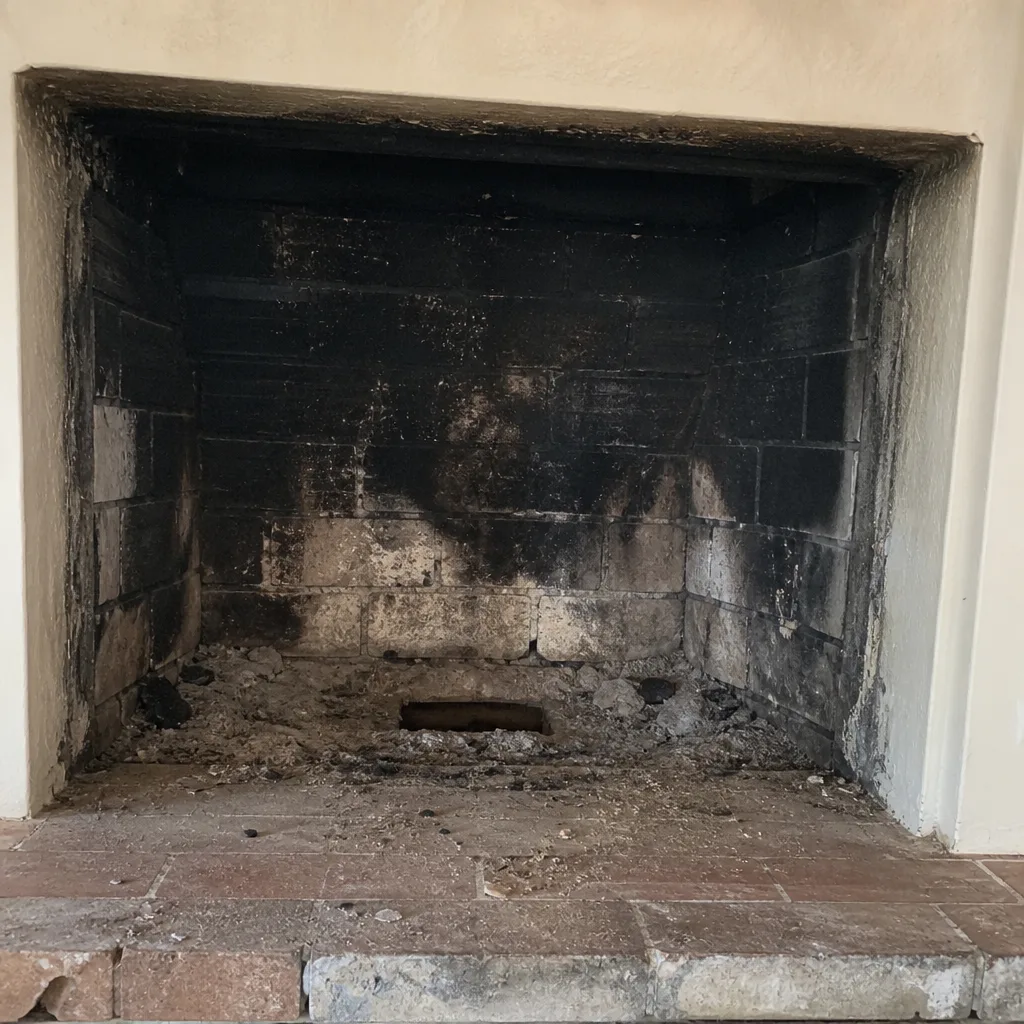 Before
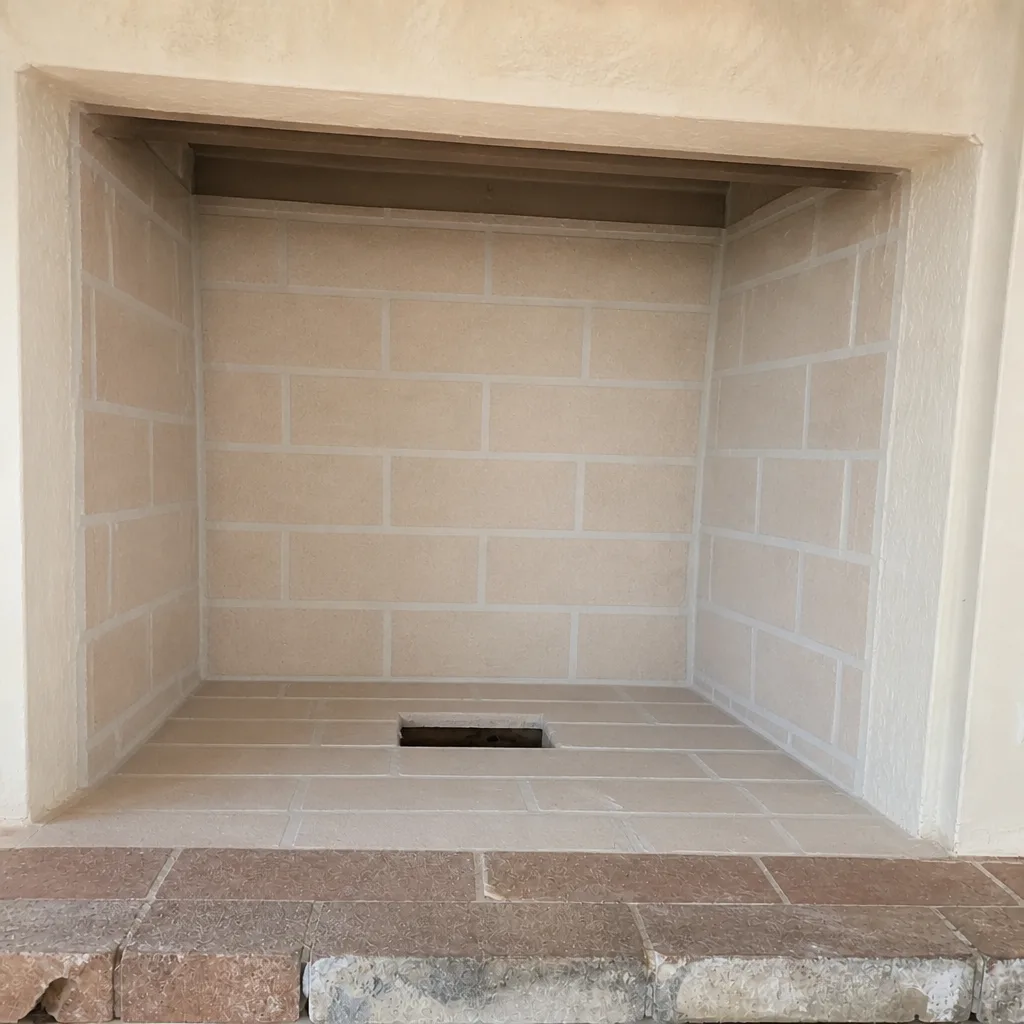 After
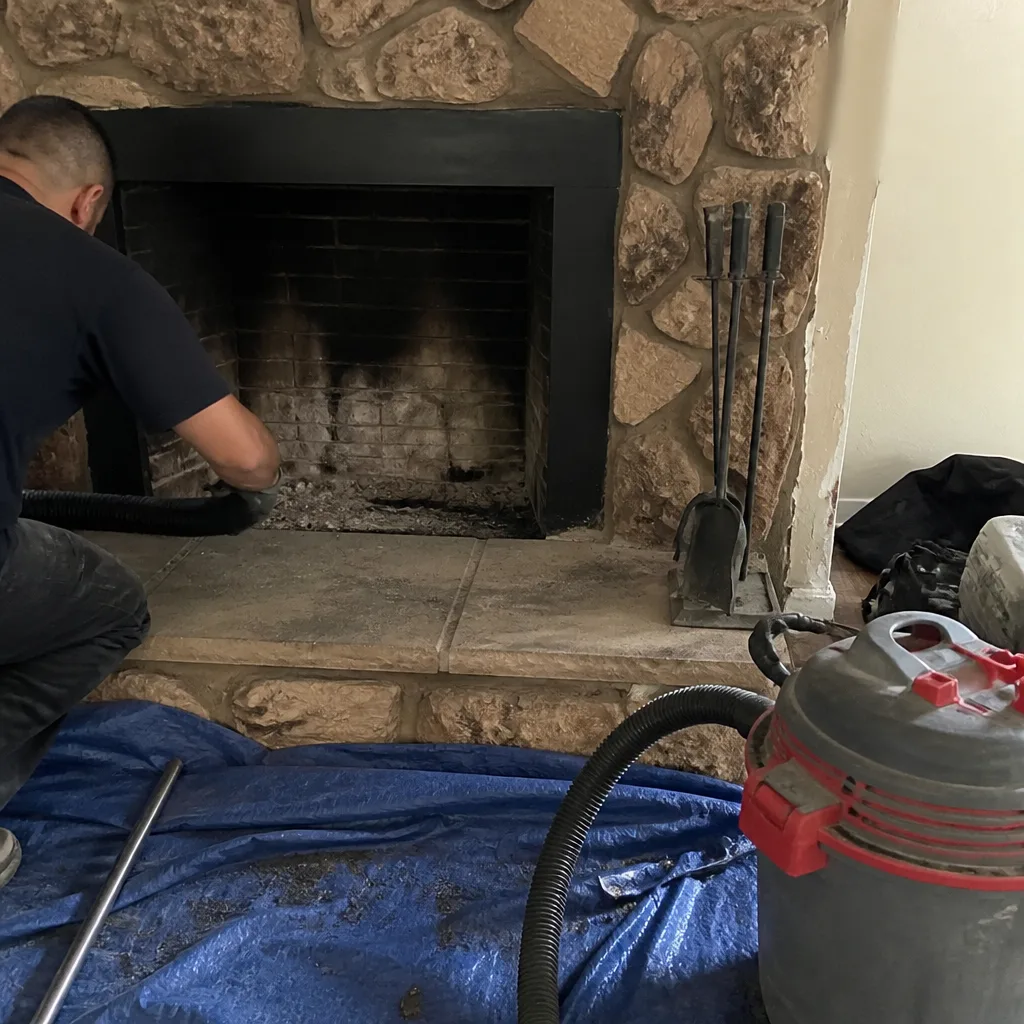 Before
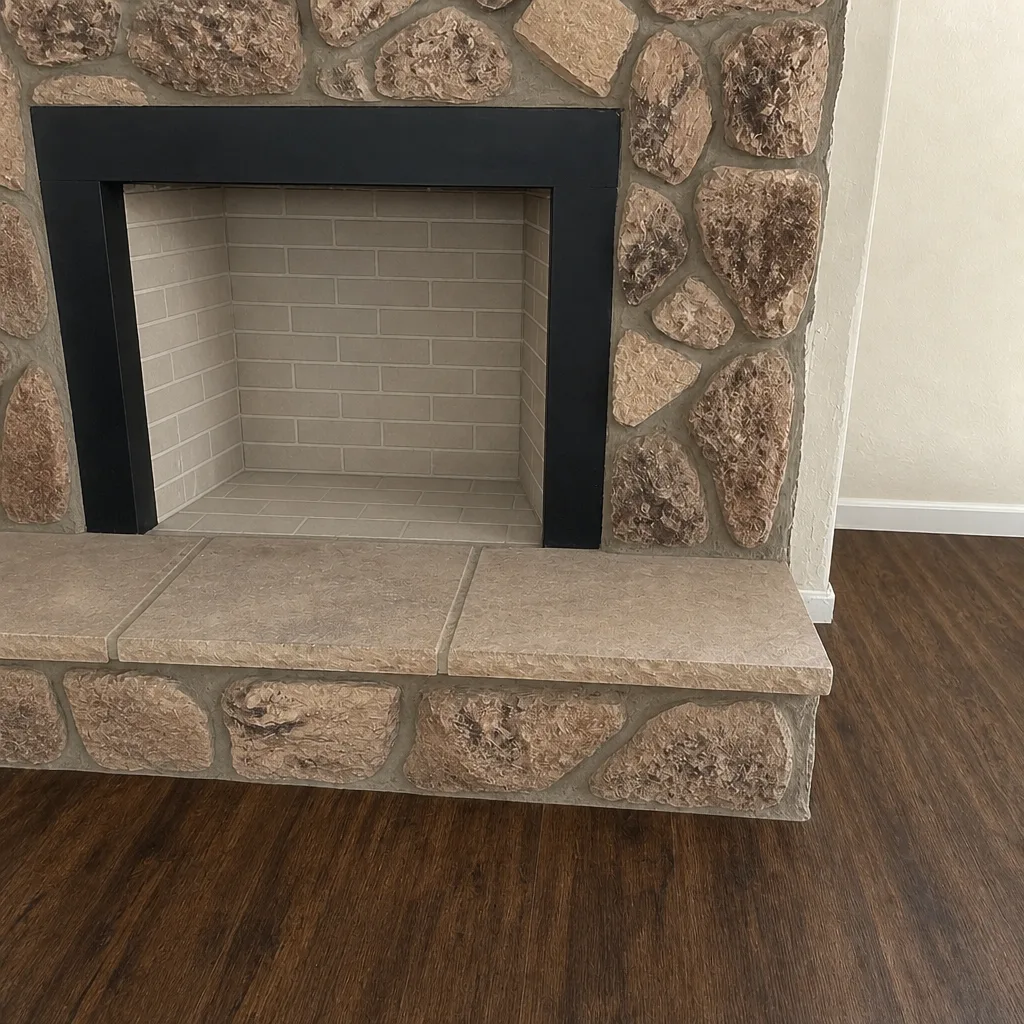 After
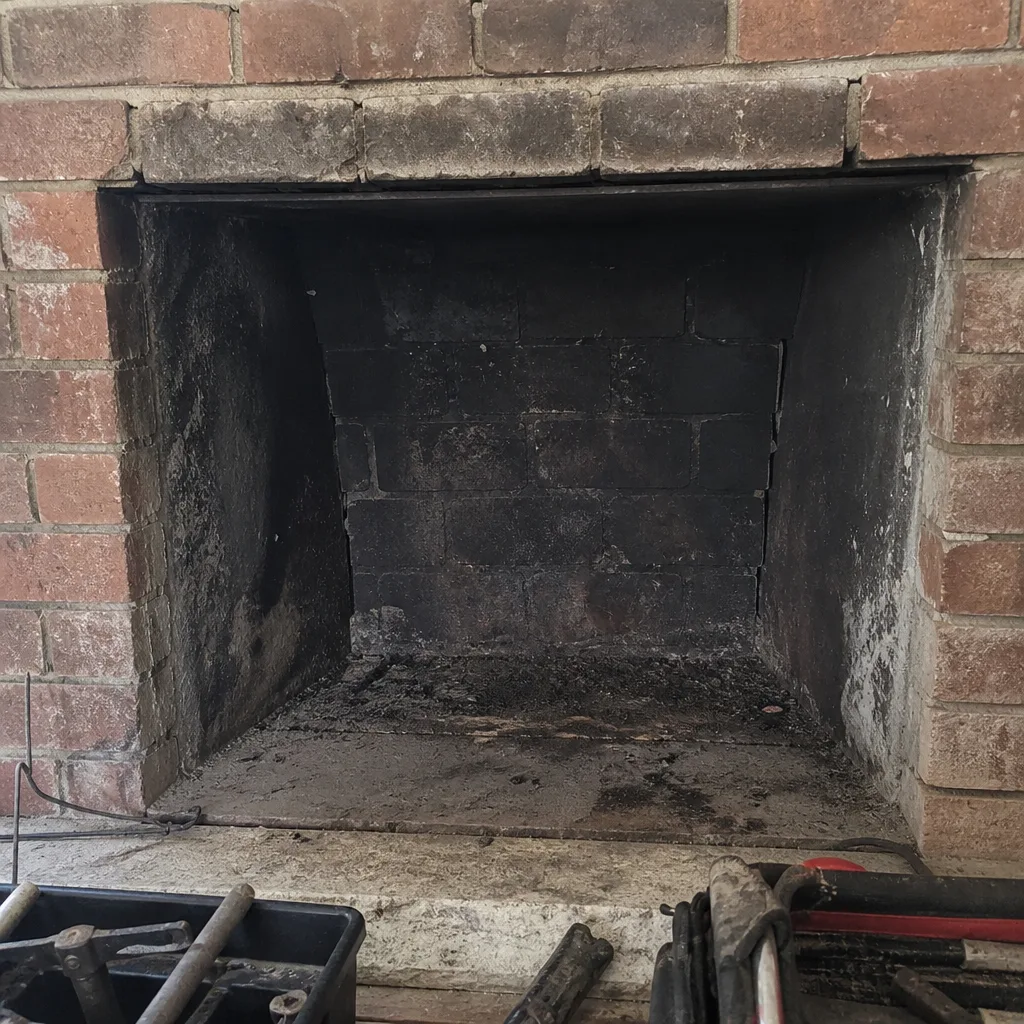 Before
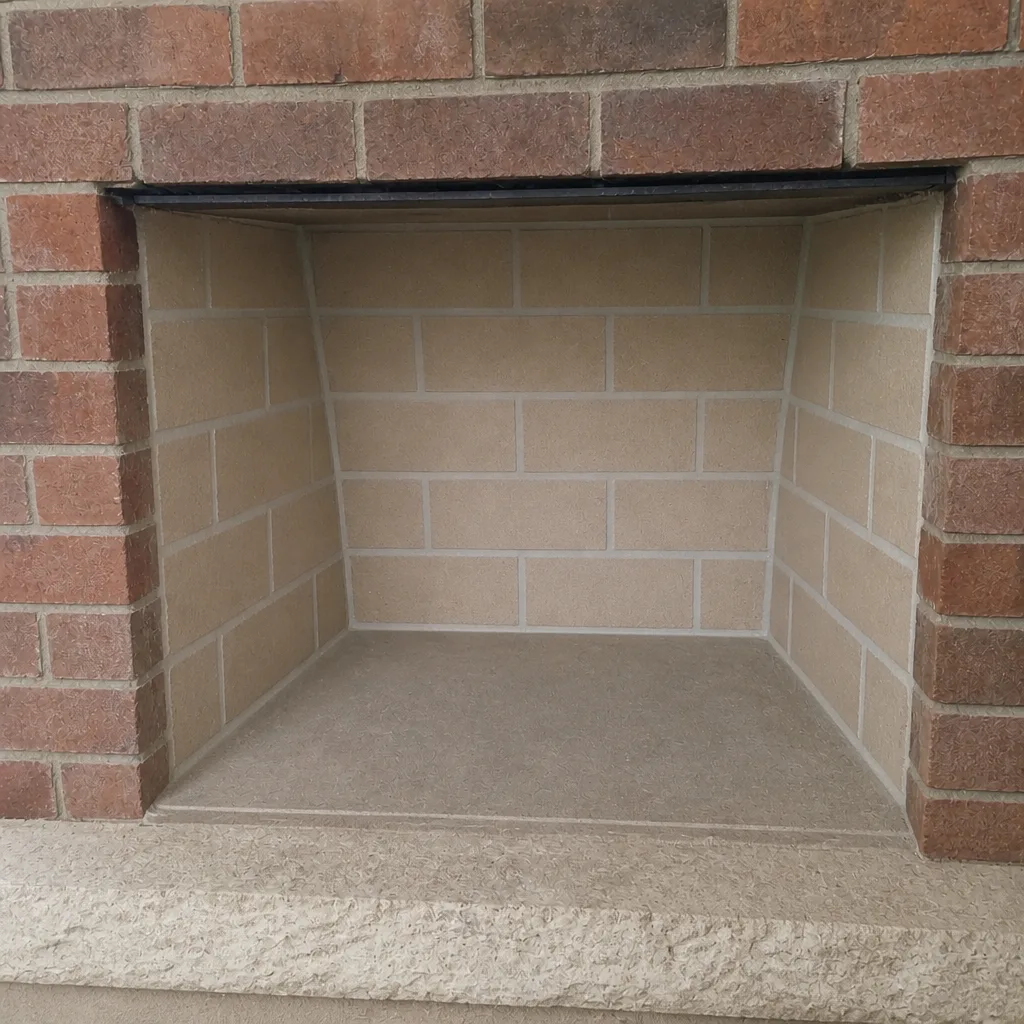 After
When to Call a Professional
Call a professional if any of these are true: you smell acrid or petroleum-like creosote in the firebox, you see cracked or missing flue tiles on inspection, smoke fills the room and doesn’t clear within 20 minutes, spalling brick or mortar is dropping into the firebox, or your home produces a smoky smell with no fire lit and no clear other source. Also call if you’ve burned a full season without a cleaning and haven’t had the flue inspected. Chimney Sweep Vallejo offers free estimates in Vallejo, and we’ll walk through the camera evidence with you so you can see exactly what we’re recommending and why. Call (844) 320-2881. We answer 24/7. Fast dispatch from 7am to 7pm, Sunday through Friday.
Frequently Asked Questions
Smoke at startup almost always means a cold flue. The air inside the chimney is the same temperature as the outdoor air, so it has no upward lift until the fire warms it. Pre-warm the flue with a small kindling fire first, and the main fire will draw normally. If smoke still rolls back after 20 minutes of burning, the cause is a blockage or pressure problem and it needs inspection. Call (844) 320-2881 for a free estimate.
The general rule is once a year if you burn regularly, and a proper inspection each season whether or not you sweep. If you burn heavily, or burn a lot of wood that hasn’t fully dried, you may need a cleaning mid-season. It also depends on what your firebox smells like when cold: musty is fine, acrid means stop until cleaned. Call (844) 320-2881 and we’ll tell you what we’d recommend for your situation.
Not always. A deteriorating liner surface can often be resurfaced with HeatShield rather than fully replaced, which saves the cost of a new liner on a flue that hasn’t physically failed. A full replacement is the right call when the tiles are cracked or the structure is compromised. We’ll show you the camera evidence and let you see the difference. Call (844) 320-2881 for a free estimate.
Creosote keeps building every time you burn, and it advances through stages. First-stage soot and ash are easy to remove. Second-stage crusty creosote is harder and increases fire risk. Third-stage glazed creosote is the genuine danger. Skipping service also means cracked flue tiles and mortar problems go unseen until they’re big repairs. Call (844) 320-2881 to schedule an inspection.
Yes, in a specific way. Vallejo’s marine layer leaves the flue filled with cool, damp air most mornings, which means the cold-stack pattern is common here. It isn’t a structural problem and a sweep won’t fix it. Pre-warming is the answer. If you also get smoke when there’s no fire heating and the house is closed up, that’s negative pressure and an inspection is warranted. Call (844) 320-2881.
A sweep fixes creosote and blockage. It doesn’t fix cold-stack, negative pressure, or structural damage. That distinction matters because homeowners regularly pay for a cleaning that doesn’t change their complaint. If your chimney smokes at startup and clears, or smokes when the kitchen hood runs, we’ll tell you plainly that a sweep isn’t the answer. Call (844) 320-2881 for a free estimate.
The Bottom Line
Read the symptom before you book the service. Cold-stack backdraft clears in 20 minutes; blockage gets worse the hotter the fire burns; negative pressure appears when a competing fan runs or the house is sealed tight. Your firebox smell tells you which creosote stage you’re in, and petroleum-like or acrid smells mean stop burning now. Structural signs like spalling, cracked flue tiles, and mortar washout need repair, not sweeping, and HeatShield or DuraFlex can sometimes save a liner that looks like a replacement. The right diagnosis is the difference between a fixed chimney and a bill for the wrong work. Chimney Sweep Vallejo is here to help Vallejo homeowners sort which problem they actually have and what it actually needs.
Call (844) 320-2881 for a free estimate. We answer 24/7. Fast dispatch from 7am to 7pm, Sunday through Friday. Our technicians have up to 15 years of experience, and we’ll walk you through what we find so you’re never guessing about what your chimney needs. For the full span of our chimney services, start at Chimney Sweep Vallejo.
Written by the team at Chimney Sweep Vallejo.