
Last updated November 15, 2026
 Sweep & inspection
 Caps & crowns
 Flue relining
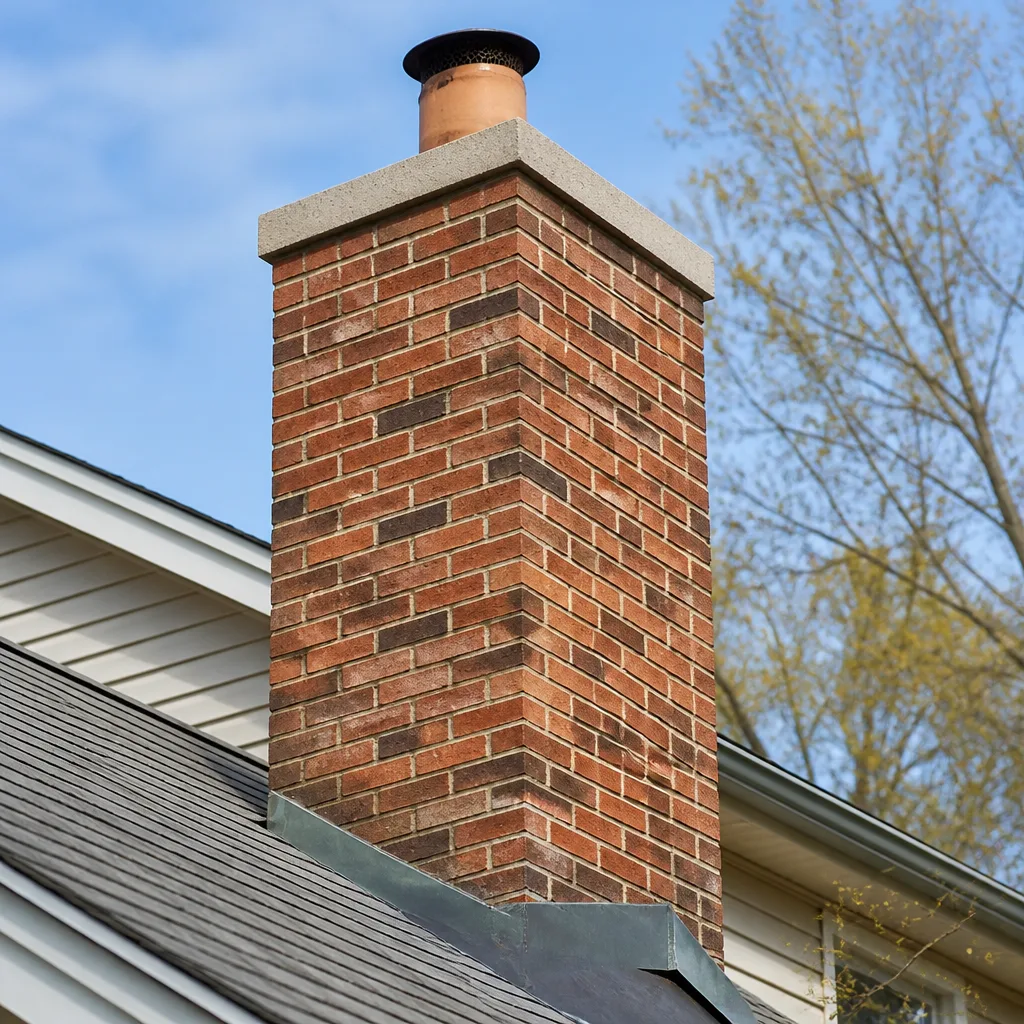 Masonry repair
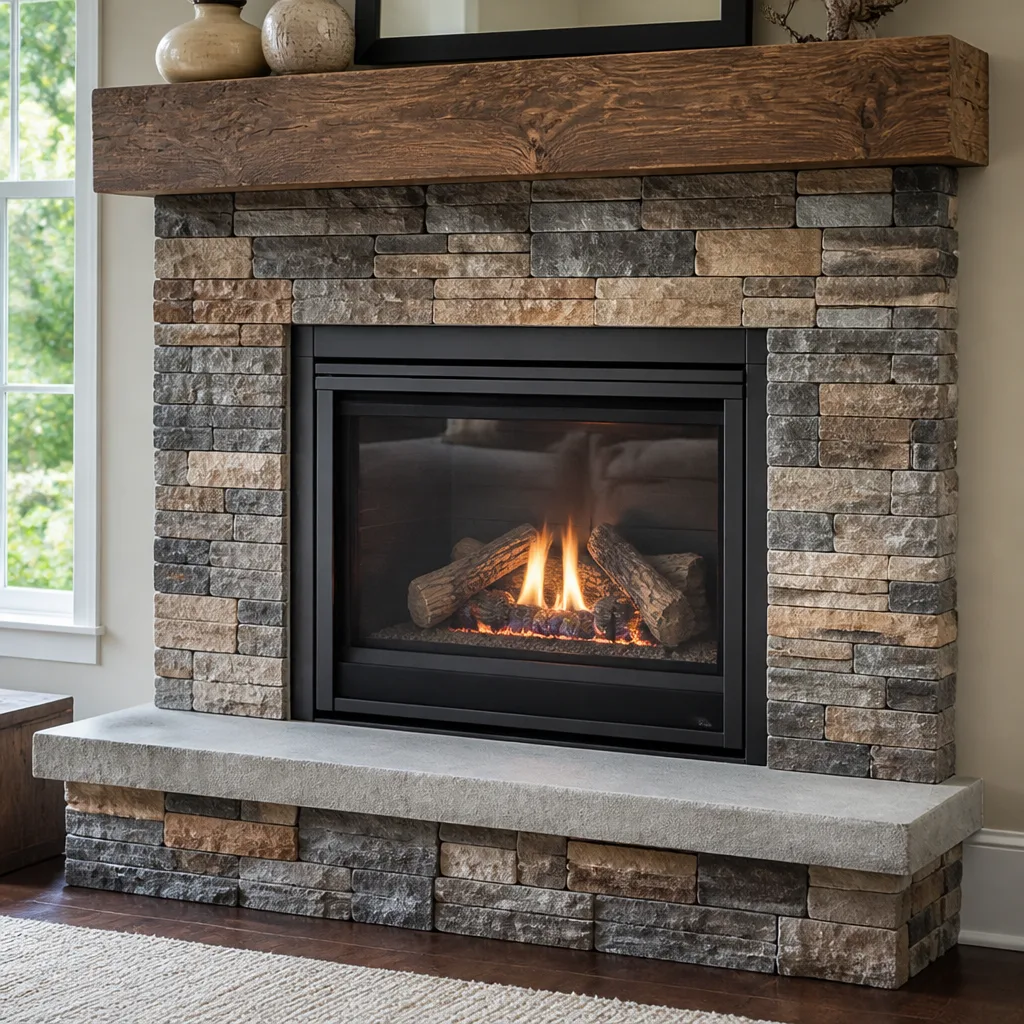 Gas fireplace service
Level 1 sweep and inspection to the NFPA 211 annual standard - flue, crown, cap, and flashing checked and photographed
Chimney sweep logs do not sweep chimneys. They loosen some creosote - which then falls where a brush and vacuum still have to collect it.
Chimney Cleaning Warning Signs: A Vallejo Homeowner’s Reference Guide
Most of the chimney problems homeowners actually notice are late-stage signals, not early ones. Smoke rolling into the room, a fireplace that smells like a campfire on a humid July morning, a dark stain spreading across the ceiling above the hearth: by the time any of these show up, the condition behind them has usually been developing quietly for a while. That’s the uncomfortable truth about chimney maintenance. The early stages are almost silent. This guide works backward from the symptoms you can see to the structural causes underneath them, so you can judge how urgent a problem really is, what it will likely involve, and when a fireplace should stay cold until someone qualified has looked at it. We’ll get into the specific warning signs that turn up in Vallejo’s older housing stock and how to document what you’re seeing so a sweep can triage it before anyone drives out.
Quick Answer
The main chimney cleaning warning signs are a strong smoky or creosote odor from the firebox, smoke spilling back into the room instead of drafting up, dark staining on the chimney exterior or around the hearth, visible creosote buildup inside the flue, and crumbling mortar or spalling brick on the chimney structure. Odor and smoke rollout usually mean creosote has built up to a level where it’s actively releasing gases into the living space, which is a fire risk, not a housekeeping nuisance. If you see any of these, stop using the fireplace until a professional inspects it.
Styles & brands we work with
- Sweep & inspection
- Caps & crowns
- Flue relining
- Masonry repair
- Gas fireplace service
Table of Contents
- How a chimney fails: the sequence most homeowners never see
- Symptom to cause: what each warning sign actually means
- Creosote degrees and why the difference matters
- Warning signs specific to Vallejo’s older housing stock
- White efflorescence staining: water intrusion, not cosmetics
- Schedule a cleaning soon vs. stop using the fireplace now
- How to photograph and document warning signs before you call
- What a proper inspection and sweep involves, step by step
How a chimney fails: the sequence most homeowners never see
A chimney rarely fails in a single dramatic moment. It deteriorates in stages, and almost all of those stages are invisible from the living room. Understanding the sequence is the single most useful thing you can do, because it tells you which symptoms are early warnings and which are the final stages of a problem that’s been building for years.
The sequence usually runs like this. First, combustion deposits creosote and soot on the flue walls. That’s normal and happens with every fire. Second, if the flue isn’t swept on a sensible schedule, the creosote layer thickens and changes character, moving from a light, flaky deposit to something denser and more combustible. Third, moisture finds its way into the chimney structure through a cracked crown, failed flashing, or open masonry joints. Fourth, that moisture combines with the acidic byproducts of combustion sitting on the flue surfaces and starts eating at the mortar and brick from the inside. Fifth, the flue surface itself begins to break down, spalling and pitting, which creates a rougher surface that catches and holds even more creosote.
By the time a homeowner notices smoke rolling into the room or a persistent odor, the chimney is typically somewhere between stages three and five. The remedy is still often straightforward, but the window for the simplest repair has usually closed. That’s why we push for inspection on a schedule rather than waiting for a symptom. If you want a baseline first look at what a professional inspection covers, our guide to a chimney sweep walks through each stage.
There’s one piece of good news in all this. Chimney problems are slow. The sequence unfolds over multiple heating seasons, not overnight. A homeowner who notices a warning sign and books an inspection within a few weeks is almost always inside the window where the damage is still repairable with minor work. It’s the homeowner who notices an odor in October, ignores it until February, and runs a fire every evening in between who ends up facing the more expensive repairs.
Symptom to cause: what each warning sign actually means
Here’s where we want you to be honest with yourself about what you’re seeing, because the cause behind each symptom shapes the urgency. A homeowner who calls and says “my chimney smells” and a homeowner who calls and says “smoke comes out of the fireplace opening and stains the wall above it” are describing two different states of the same trade, and we triage them differently. Here’s the mapping.
Smoke rolling back into the room (smoke rollout)
Smoke rollout is one of the most misunderstood signs. A very cold flue, a fire started too quickly, or an open window on the wrong side of the house can all cause a one-time puffy backdraft that clears once the fire is up to temperature. If the smoke comes back every time you light a fire, though, the cause usually sits in the flue itself: a partial blockage from soot or debris, a nest near the cap, a damaged flue tile that has tilted and narrowed the passage, or a chimney that was never tall enough for the house it serves. Smoke rollout means the chimney is failing to draft, and a fire burning without proper draft is burning incompletely and putting more creosote into the flue every time you use it.
Persistent fireplace odor, especially in warm months
The campfire smell that shows up in summer or on a humid morning is creosote off-gassing. There are two things driving it. First, in warm weather the air pressure inside the house often drops relative to the outside, and that low pressure pulls air down the chimney instead of up. Second, when the creosote layer is thick enough, it releases volatile compounds into that downdraft. A thin, fresh creosote layer doesn’t smell like much. A thick, sticky, glazed deposit absolutely does. That’s why a fireplace odor is a stronger warning sign than a lot of homeowners realize: it’s the creosote telling you it’s thick enough to vaporize.
Dark staining on the chimney exterior or above the firebox
Black or brown staining on the exterior masonry near the top of the chimney is usually a symptom of improper draft and moisture. Staining inside the house, on the wall or ceiling above the hearth or mantel, can indicate a cracked flue liner allowing combustion gases and smoke to escape into the wall cavity. That’s a carbon monoxide concern, not just a cosmetic one, and it’s a stop-using signal.
Popping, crackling, or rumbling from the chimney
Some noise is normal; fires are noisy. But if the sound seems to come from up in the chimney itself, from the flue rather than the firebox, it can mean the flue tile is cracked or loose and moving with temperature changes. If the sound is a rushing, roaring noise when the fire is lit, that can point to an improperly sized flue where the flue is too large for the fire. Both deserve an inspection.
Creosote visible inside the flue
If you can shine a light up into the flue from the firebox and see a layer of buildup thicker than a light dusting, you’re past due. A quarter inch is a reasonable threshold for a cleaning. Anything approaching an eighth of an inch of dense, tar-like creosote is a fire load, and glazed creosote can reach that level faster than many homeowners expect.
Creosote degrees and why the difference matters
Not all creosote is equal, and this is where homeowners get talked into either too little or too much work. The chimney trade recognizes three general grades of creosote, and knowing the difference changes how you read your own symptoms.
- First-degree creosote is light, flaky, and dust-like. It brushes off the flue wall with standard sweep tools. This is the state you’re in after one or two seasons of normal burning. Routine cleaning handles it.
- Second-degree creosote is denser and can be flaky or crunchy on the surface with a more solid layer underneath. It’s harder to remove, and it catches fire more readily than first-degree deposit. At this level, a professional sweep generally needs more than a brush alone.
- Third-degree creosote is glazed, tar-like, and shiny. It’s essentially solidified fuel, and when it ignites, it burns hot enough to crack flue tiles and travel into the structure. Third-degree creosote is the reason chimney fires happen, and it does not come off with a standard brush. It usually requires chemical treatment followed by mechanical removal, which is why we keep professional-grade product lines on hand rather than working with generic chemistry.
The relationship between creosote degree and your burning habits is direct. Slow, smoldering burns with unseasoned wood produce far more creosote than hot, active fires with dry wood. If you’re someone who packs the firebox and lets the fire smolder overnight for warmth, your creosote buildup accelerates faster than a homeowner who runs an active burn. In Vallejo’s mild winters, a lot of homeowners burn lower and slower than they would somewhere colder, which ironically produces more creosote per fire than a hot burn would.
If you’re seeing a shiny black glaze on the flue surface, or the firebox itself has a heavy tar-like residue lining the top, don’t try to solve it with a brush. That’s the point where a professional-grade removal system, such as the ones we work with through Olympia Chimney and Copperfield, makes the difference between a successful cleaning and a liner replacement that may not actually have been necessary.
Warning signs specific to Vallejo’s older housing stock
A significant share of Vallejo’s housing predates the era of modern chimney construction materials, and many of the homes built in the first half of the last century still have original masonry chimneys with brick and mortar from a period before modern standards. That doesn’t mean the chimneys are unsafe, but it means a handful of specific signs matter more here than they would in a newer house.
Spalling brick
Spalling is when the face of a brick flakes off or the brick itself begins to crumble. Look at the exposed brick on the outside of the chimney. Smooth, hard faces are healthy. Crumbling, flaking, or deeply pitted brick faces mean the brick is saturated and has been through too many wet-and-dry cycles. Spalling brick on an older Vallejo chimney is usually a sign that water has been getting in for years and the brick faces are giving way. A repair at this stage is usually masonry work; at a later stage, it’s rebuilding.
Crumbling mortar joints
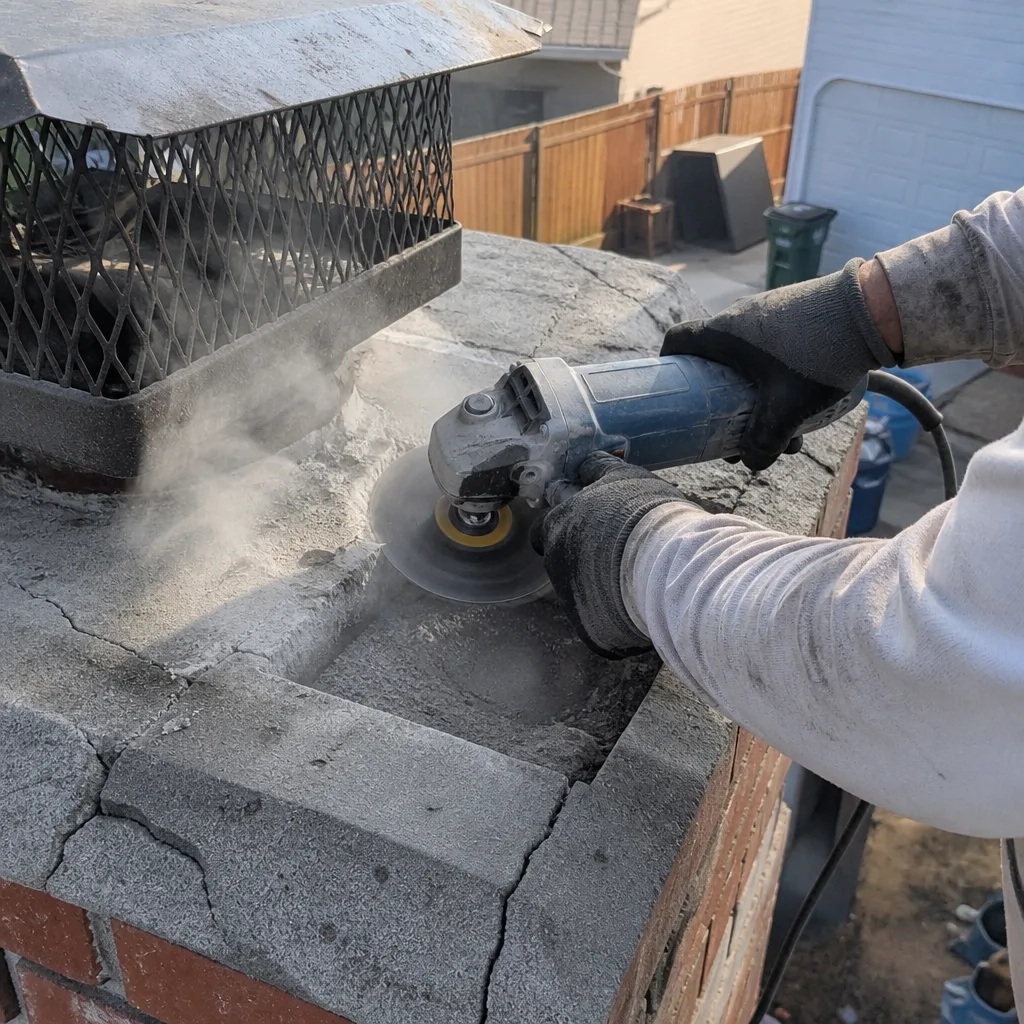
Take a look at the joints between the bricks on the exterior. Good mortar should be firm and approximately flush with the brick face. Ragged, soft, recessed, or sandy joints that scrape away with a fingernail suggest the mortar has given up its binding quality. This is normal over decades, and it’s repairable. Left alone, the mortar erodes further, water enters the wall, and the chimney loses structural integrity. Repointing the joints is a straightforward masonry job. Waiting until chunks of the mortar are landing on the roof is not.
Crown cracking
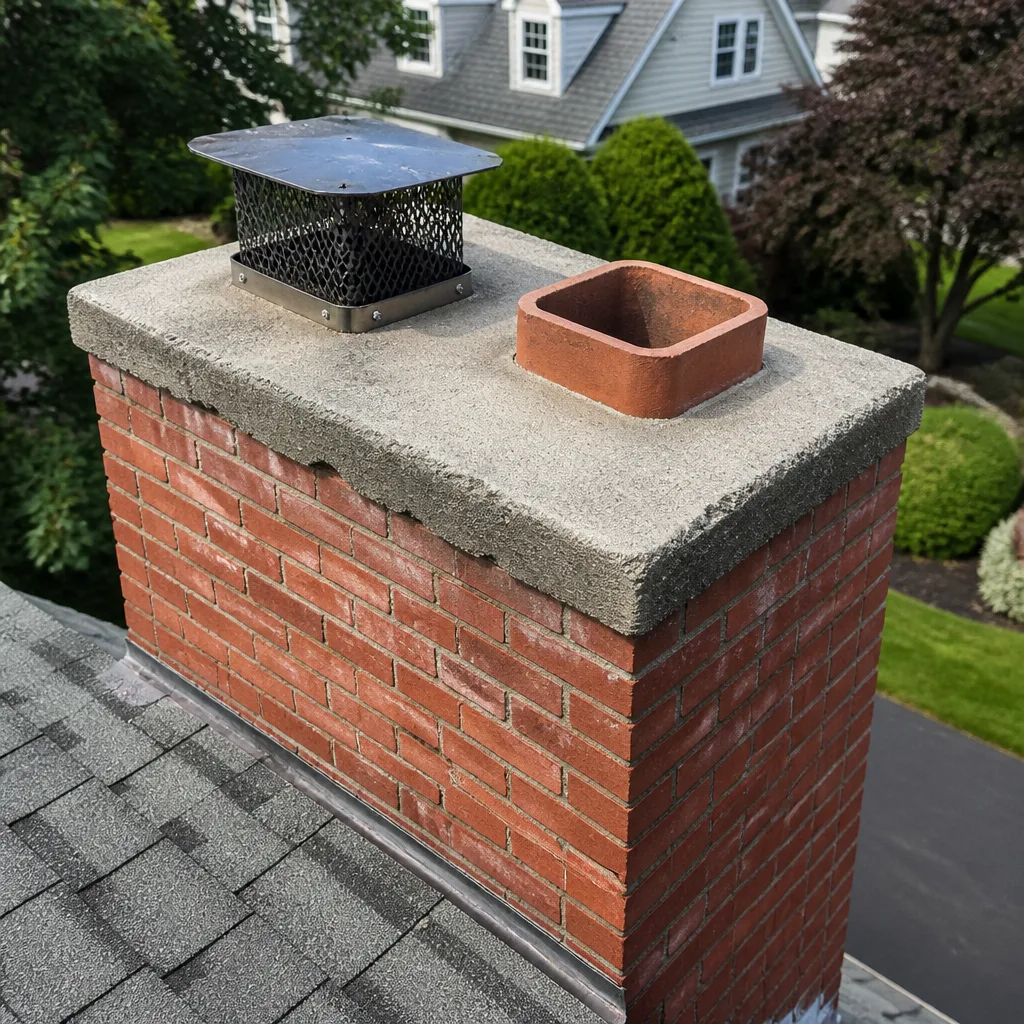
The crown is the sloped concrete or mortar cap at the very top of the chimney that sheds water away from the flue. Over enough heating and cooling cycles, the crown develops hairline cracks that widen. A cracked crown directs rainwater straight into the flue and the surrounding brick, and from the interior it doesn’t show up at all until the staining and moisture problems become obvious. On a foggy Vallejo morning, the moisture pattern around the crown is one of the clearest things an inspector can spot from the ground with the right equipment.
Failed flashing
Flashing is the metal sealing where the chimney passes through the roof. On older roofs, the flashing is sometimes tar-sealed rather than properly formed with metal, and tar seals fail. If you can see black streaks running down from the roofline where the chimney meets the roof, or if the roof shingles around the chimney look lifted or soft, the flashing has likely failed and is letting water in.
Tilted or missing chimney cap
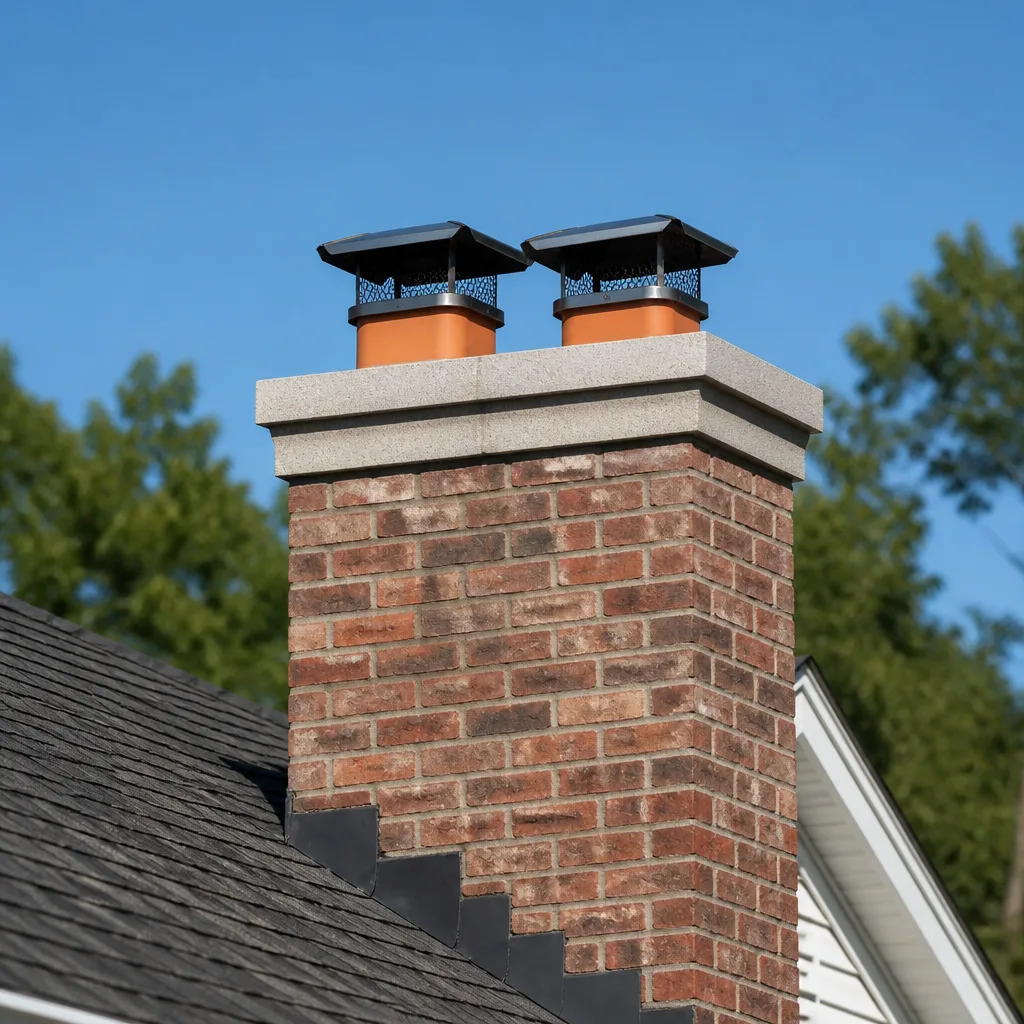
A cap or crown cover that has slipped, tilted, or rusted away leaves the flue wide open to rain, birds, and squirrels. A rusted or missing cap is not a cosmetic issue. A cap and cover replacement using components from a line like Famco is one of the cheapest fixes you can make, and it’s one of the most important.
White efflorescence staining: water intrusion, not cosmetics
Efflorescence is the white, chalky, salt-like powder that sometimes appears on the exterior of a brick chimney. A surprising number of homeowners treat it as a cosmetic annoyance and paint over it. In our experience, white efflorescence on a chimney is almost always the surface signature of water moving through the masonry from somewhere it shouldn’t be.
Here’s what’s happening at the structural level. Water has found a path into the chimney brick, typically through a failed crown, cracked mortar joints, failed flashing, or an unsealed chimney cap. As the water travels through the brick, it dissolves mineral salts naturally present in the masonry and the mortar. When the water reaches the outer surface and evaporates, the salts are left behind as that white powder. Remove the powder and it comes back, because the water is still moving. The visible white is the end of a pathway whose other end is somewhere inside your chimney.
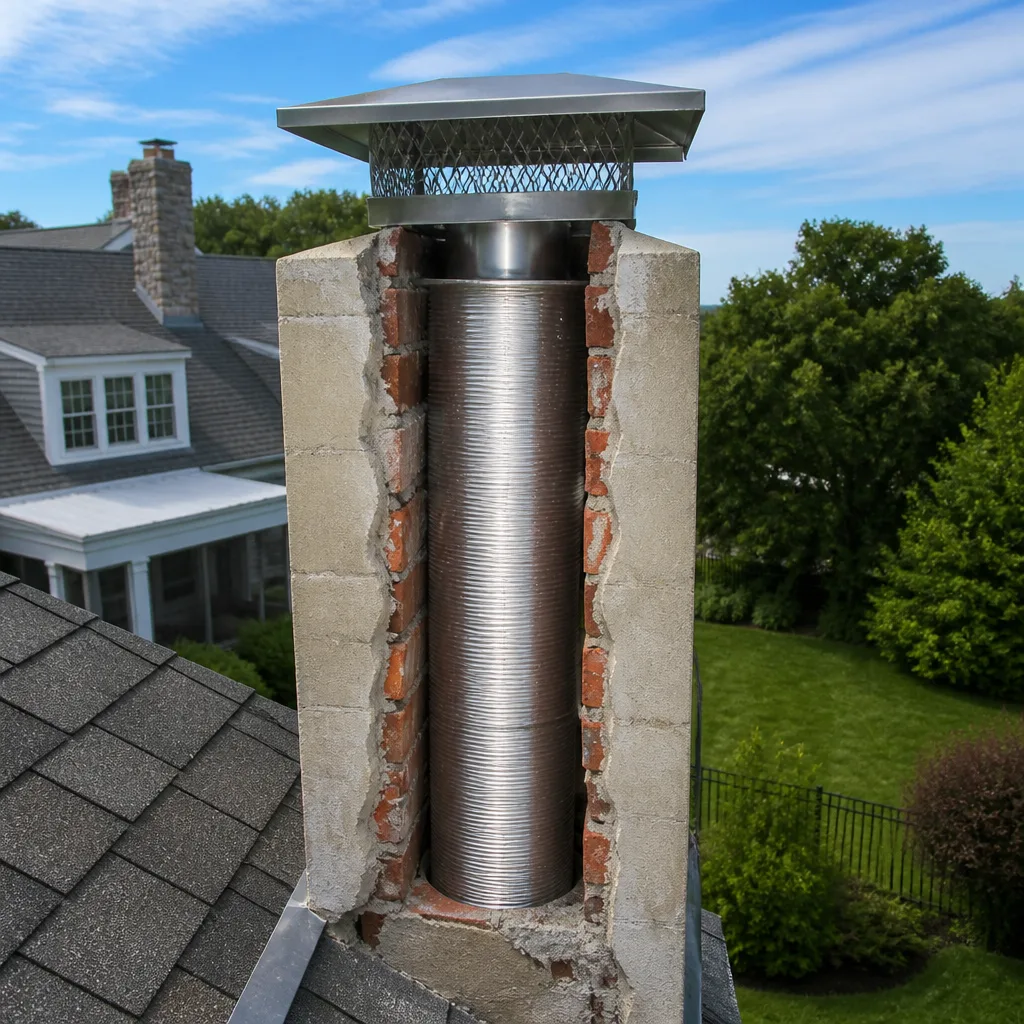
Ignoring efflorescence is expensive because the water isn’t stopping at the brick face. It’s also attacking the mortar on the interior of the flue and the outside surfaces of the flue tiles. The acidic byproducts of combustion sitting inside the flue combine with the moisture, and the combined effect is a slow chemical attack on the very mortar that holds the flue tiles together. The repair sequence at that point often includes repointing, crown repair, and sometimes flue resurfacing to restore the interior surface. A HeatShield flue resurfacing can often restore a deteriorating but structurally sound flue liner without a full replacement, which is a considerably different expense from a full DuraFlex liner install, and the difference matters to most homeowners.
If you’ve tried scrubbing efflorescence off a Vallejo chimney and it keeps returning, don’t keep scrubbing. The repeating return is the chimney pointing to the water source, and the fix is upstream of the surface stain.
Schedule a cleaning soon vs. stop using the fireplace now
Not every warning sign means stop. Homeowners deserve a clear, honest line between “this needs to be scheduled” and “this needs to be treated as a fire hazard today.” Here’s how we split it.
Signs that mean “schedule a cleaning soon”
- A light creosote layer visible in the flue, thinner than a quarter inch
- Soot dusting collecting on the firebox surfaces
- A faint smoky smell after a fire that fades within a day
- A chimney cap that is intact but beginning to rust
- Minor mortar joint erosion on the exterior, still firm to the touch
These are routine maintenance-level signals. A sweep booked in the near future before the next burning season will resolve them.
Signs that mean “don’t use this fireplace until inspected”
- Smoke rollout that happens every time you light a fire, once the flue is warm
- Dark staining inside the home on the wall, ceiling, or mantel above the firebox
- A strong, persistent fireplace odor in the room that lingers for days
- Visible glazed, tar-like creosote in the flue
- Crumbling mortar with chunks missing from the chimney exterior
- Loose or tilted flue tiles visible from the firebox opening
- Any chimney fire, past or present, especially one that involved noise
If you’ve had a chimney fire, even a small one you were able to put out by closing off the air, treat the chimney as unsafe until it’s inspected. The heat from a chimney fire can crack flue tiles without any visible symptom, and the cracked tile opens a path for combustion gases into the wall cavity. Carbon monoxide is the concern we take most seriously in the trade, and a home where a chimney fire has happened is one where a carbon monoxide detector should be checked and the chimney inspected before another fire is lit.
How to photograph and document warning signs before you call
Most homeowners who call a sweep describe the problem in a way that doesn’t help us triage. A call that says “my chimney is broken” leads to a visit that has to cover everything. A call that says “there’s white powder on the outside and a dark stain on the wall above the firebox, and the fireplace smells like a campfire in August” lets us bring the right tools the first time. It also saves a return visit and keeps the estimate accurate.
Here’s how to document what you’re seeing before you call.
- Photograph the exterior of the chimney from the ground. Use the widest zoom your phone allows and stand well back so the whole chimney is in frame. Take one photo in daylight and one in shadow if possible, so the surface texture is visible.
- Photograph the firebox interior with a flashlight. Use your phone in one hand with the flashlight in the other, and shoot straight up at the damper and the base of the flue. If you can’t reach, don’t climb. A clear photo of the damper opening is enough.
- Photograph the room around the fireplace. Take a shot of the wall and ceiling above the mantel, the hearth itself, and any area within a few feet of the fireplace where you’ve noticed a stain or discoloration.
- Write down what the smell reminds you of. “Campfire,” “tar,” “smoky,” “chemical,” and “musty” all point to different states of creosote and moisture. The descriptor is a real clue for the sweep.
- Note when the symptom appears. Only in summer? Only when it’s foggy? Only when you first light the fire? Only when there’s wind outside? This is the single most valuable piece of information you can hand over.
- Note how long ago you last had the chimney swept. “I’ve never had it swept” is common and fine. “It was swept two years ago” is more useful because it lets the sweep compare the current creosote load to a known baseline.
- Take a photo of any smoke rollout as it happens. This one is hard to catch, but if you’re firing up and the smoke starts rolling out, take a fifteen-second video. Watching the smoke pattern tells a sweep a lot about whether the cause is draft, blockage, or the house’s pressure balance.
Send the photos with your call or before your appointment, and ask specifically whether anything in what you’ve sent should change the urgency.
What a proper inspection and sweep involves, step by step
A chimney inspection that’s done properly follows a predictable sequence, and knowing it lets you compare what you’re told against what actually happens. Here’s what the sequence looks like in our experience.
- Exterior assessment from the ground. We look at the crown, the cap or cover, the flashing, the mortar joints, and the brick face. Efflorescence, spalling, and rusted caps are noted at this stage.
- Interior inspection at the firebox. We open the damper, inspect the firebox walls and the smoke chamber, and check the damper door operation. Cracks in the firebox brick and missing mortar joints get flagged here.
- Flue inspection with a camera. A camera is dropped down the flue to check for creosote grade, tile cracks, offset joints, and obstructions. This is the part that determines whether a sweep is sufficient or a repair is needed. If any part of the inspection recommends repair work, we show you the photos from the camera, not a description of what we saw.
- Sweep with the appropriate tools. For first or second-degree creosote, a combination of poly brushes and rods handles the removal. For third-degree glazed creosote, chemical treatment is applied first, allowed to soften the deposit, and then mechanically removed. This is where working with a professional-grade product matters, because generic chemistry often fails against a fully glazed flue.
- Debris cleanup and disposal. Soot, ash, and creosote debris are bagged and removed from your home. The firebox is left clean, and the floor protection is removed.
- Report with photos. We walk you through what we found, what we did, and what needs attention. If any repair is recommended, we explain why, show you the photo evidence, and give you the option to defer if the work is safe to defer.
- Recommendation on timing. If the chimney is structurally sound and clean, you may not need anything further for a season or two. If a repair is needed, we tell you what it involves and what happens if it waits.
The key part of that sequence for a homeowner is step six. Any chimney professional who tells you that you need thousands of dollars of masonry work without showing you the camera footage or the exterior photos is asking you to trust something you can’t verify. That’s exactly the hesitation we hear most, and it’s a legitimate one. The answer is simple: nothing should be recommended without photo evidence you can look at yourself. And a good sweep will just as clearly tell you when work can safely wait.
If you’re also thinking about the rest of your home’s venting while a sweep is on site, dryer vent cleaning is worth a conversation. A lint-clogged dryer duct is a genuine fire hazard, not a housekeeping task, and it’s the kind of thing best handled in the same visit if the vent stack is accessible. Our dryer vent cleaning service covers exactly that.
Common Mistakes to Avoid
- Painting over efflorescence or staining. Paint traps moisture inside the brick and the mortar, and the trapped water is the actual problem. It will keep working on the masonry behind the paint.
- Burning softwoods or unseasoned wood to save money. In Vallejo’s mild climate, it’s tempting to burn whatever’s local and cheap, but higher-moisture wood produces more creosote per fire, and the buildup accelerates the same warning signs you’re trying to avoid.
- Confusing an annual visual look with an inspection. Peering up into the firebox with a flashlight catches obvious problems only. The conditions that matter most (cracked flue tiles, third-degree creosote, crown cracking) are usually revealed by a camera run down the flue, not a look from below.
- Assuming a “clean” chimney can’t be structurally damaged. Sweeps get called to chimneys that look clean because someone has been sweeping regularly, and the flue tiles are still cracked. Cleaning and inspecting are two different things, and you need both.
- Waiting to call until you smell smoke in the house. By the time smoke is entering the living space, you’re past the early warning window. If you’ve noticed a persistent odor or a stain, call when you notice it.
- Letting a handyman repoint the chimney without checking the flue interior. Exterior mortar repair is important, but if the flue tiles are also failing, the interior problem is the one that carries fire and gas risk. A repointed chimney with a cracked flue is still unsafe.
- Firing the fireplace after a chimney fire without an inspection. A chimney fire that appeared to go out can leave cracked tiles and damaged deposits behind. The risk isn’t from the fire you saw; it’s from the damage you can’t.
See the difference
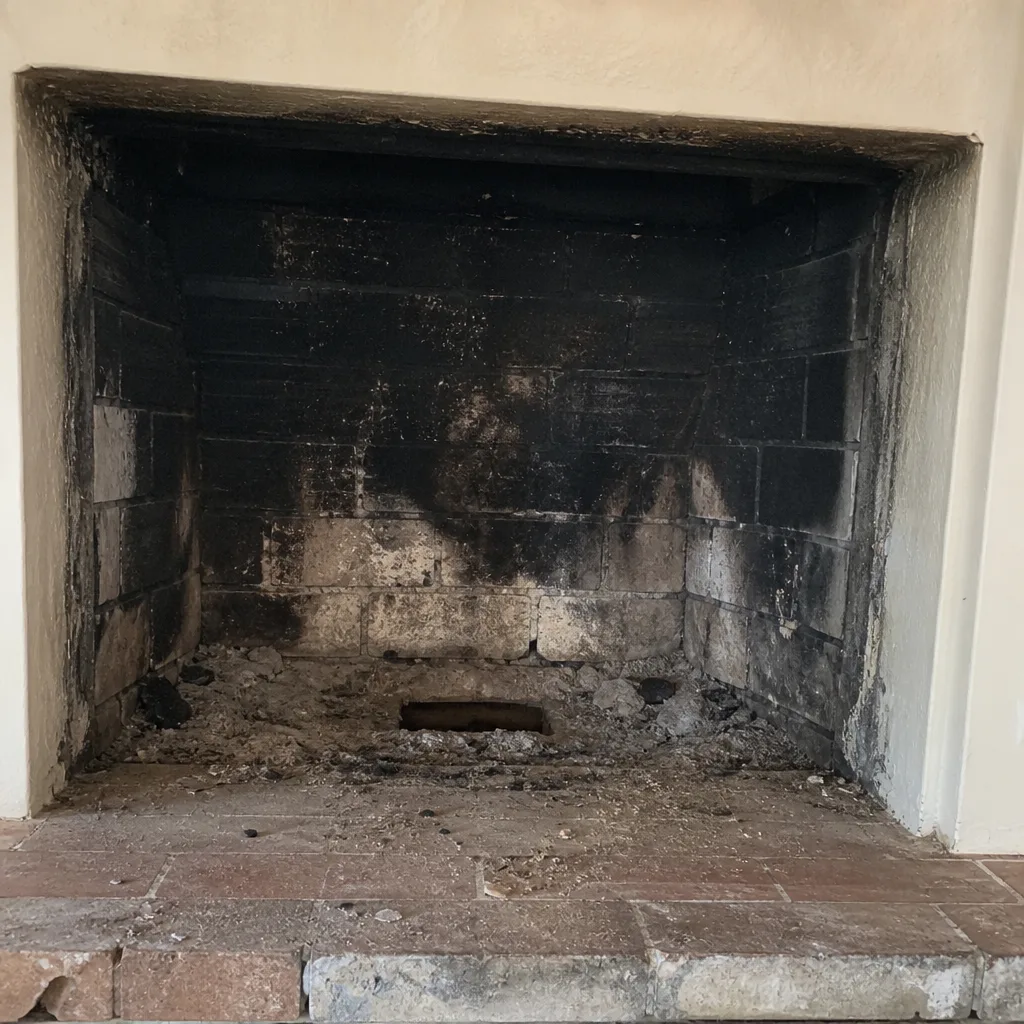 Before
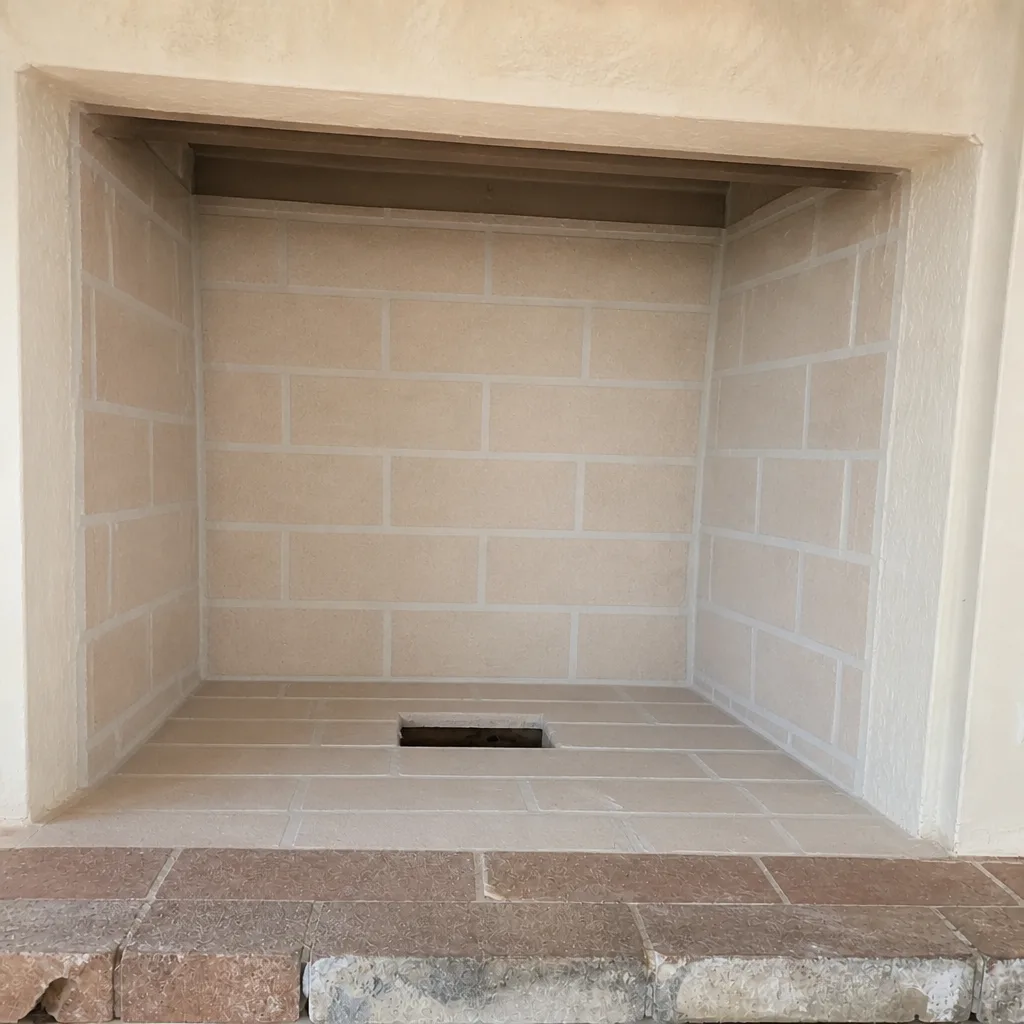 After
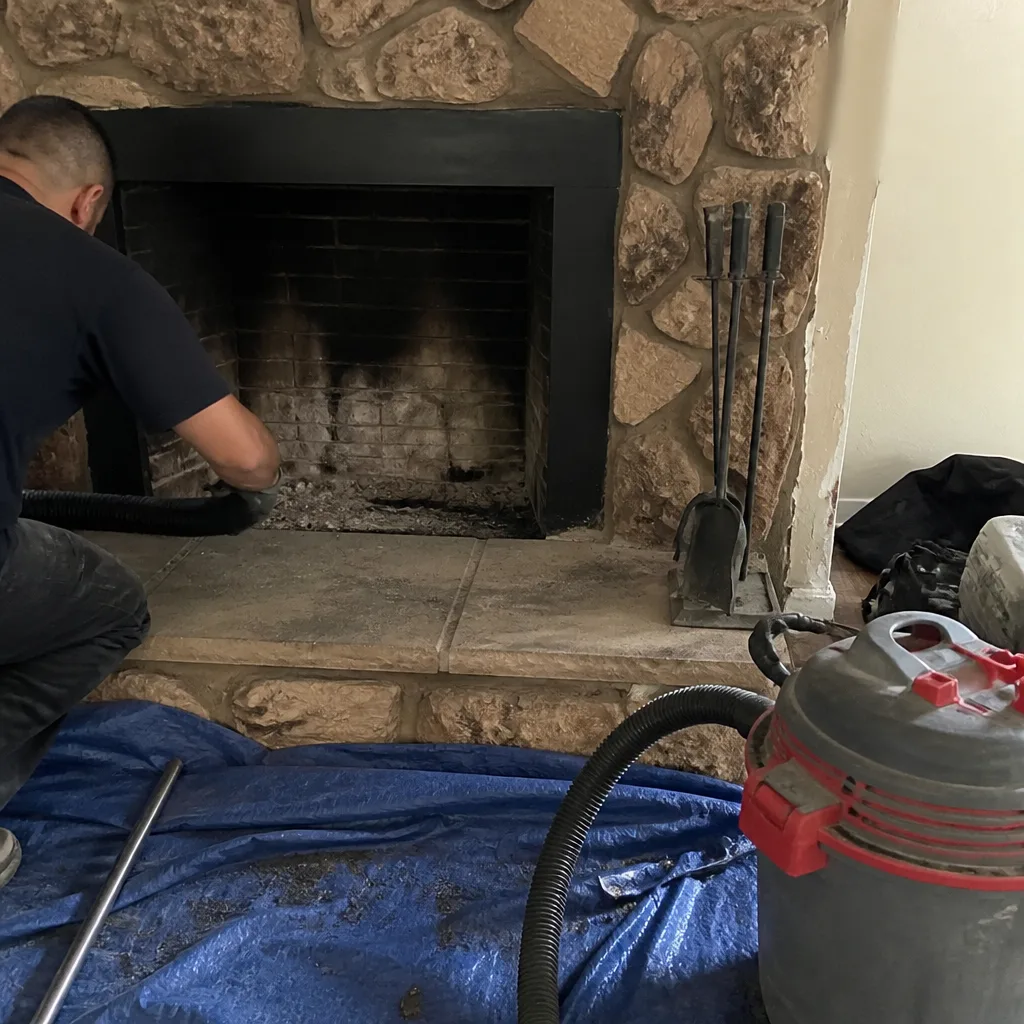 Before
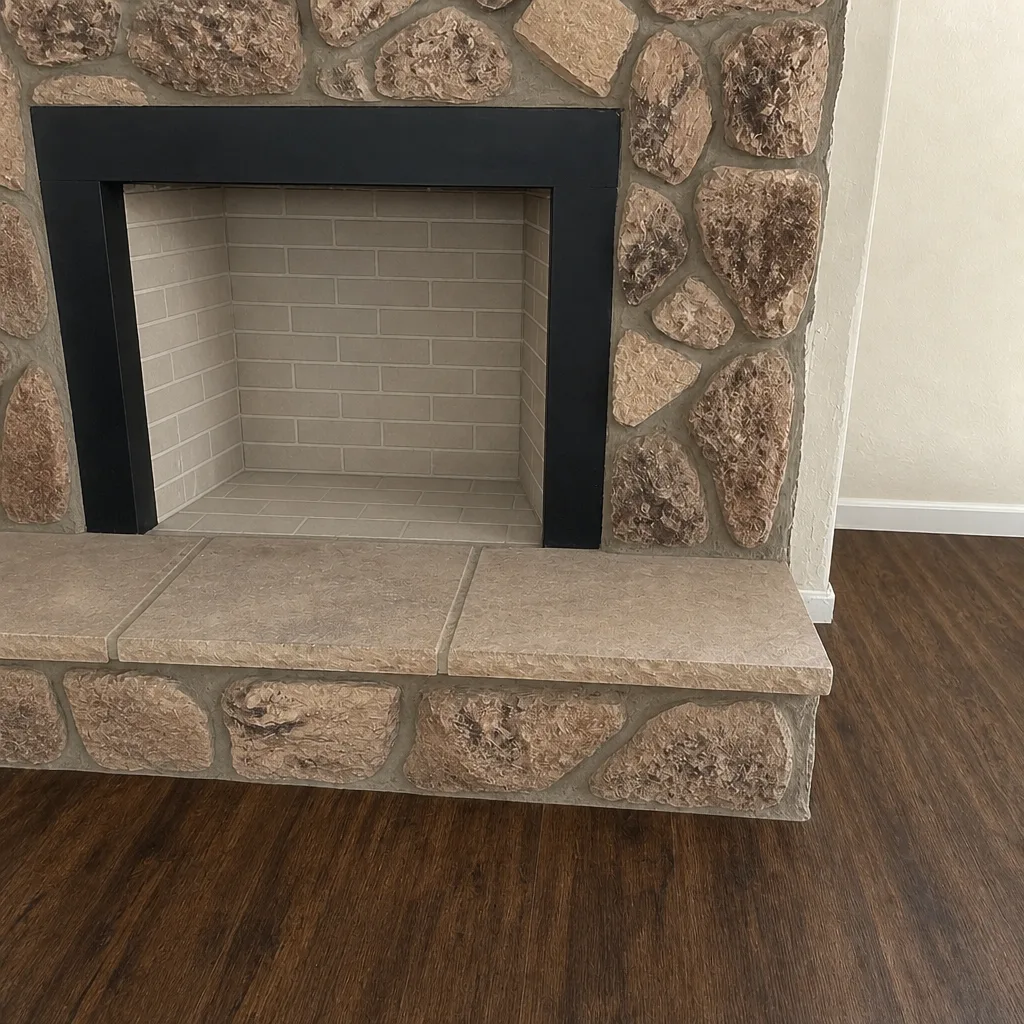 After
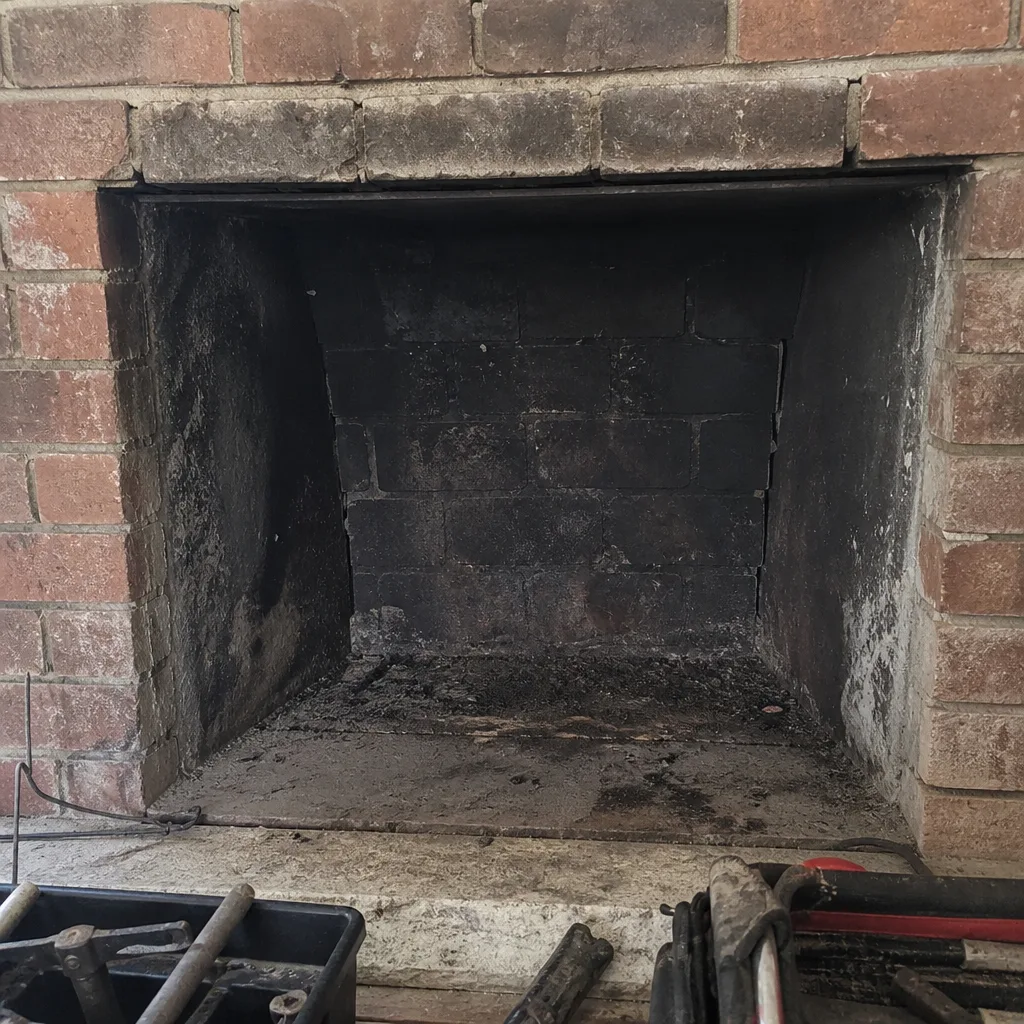 Before
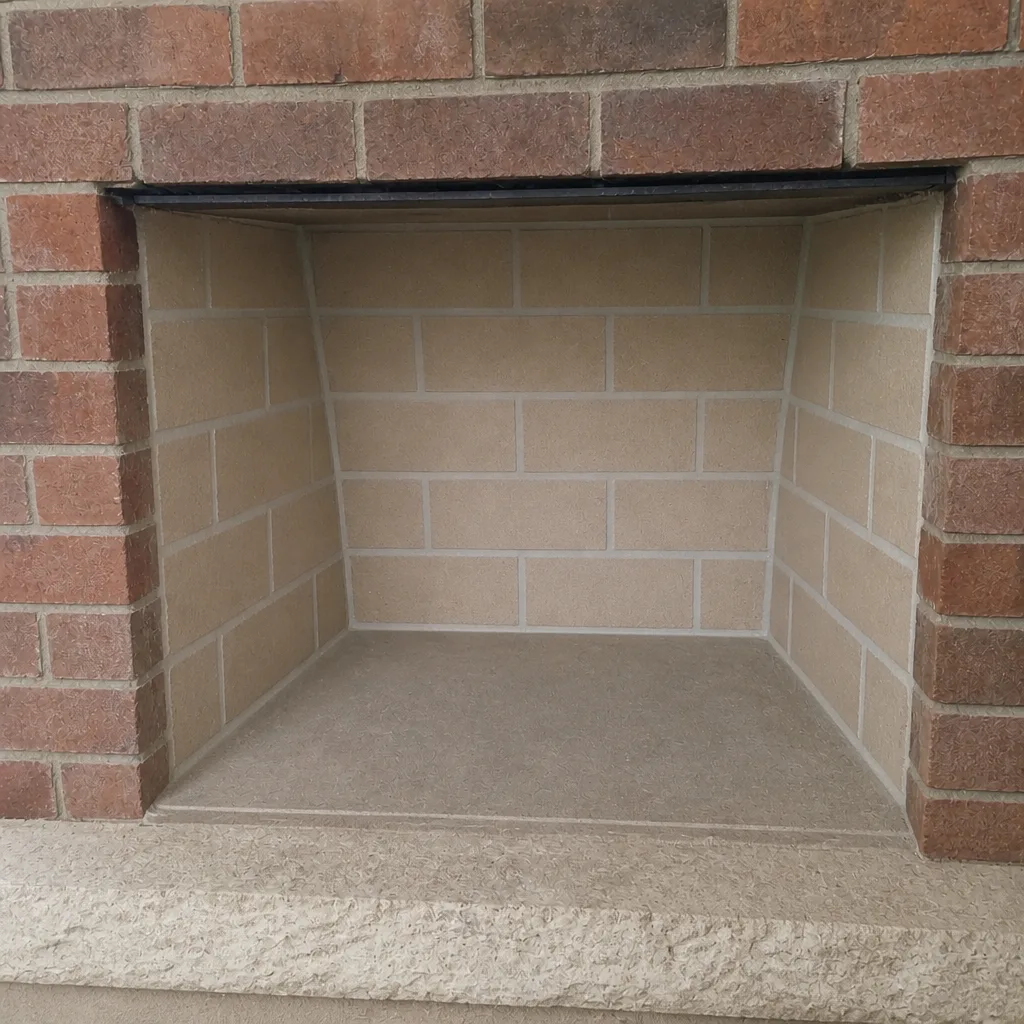 After
When to Call a Professional
Call a professional when you notice any sign in the “stop using the fireplace” list above, when the exterior masonry shows spalling brick or crumbling mortar, when efflorescence keeps returning after you clean it, or when you simply don’t know the condition of a chimney you haven’t used in a season or more. Call if you’ve had a chimney fire, even a small one. Call if the last time the chimney was swept is unknown. Call if smoke rollout happens repeatedly, or if the chimney has visible damage from the ground. There is no warning sign in this guide that becomes safer by waiting a season.
Chimney Sweep Vallejo offers free estimates in Vallejo. We work with professional-grade product lines including DuraFlex, HeatShield, Olympia Chimney, Famco, and Copperfield, and we handle inspection, cleaning, and repair as a single-provider service, without subcontracting the repair out. Our technicians have up to 15 years of experience. Call (844) 320-2881 to book, or read more about the company on our home page. If you’d like a solid overview of the place we’re writing for, see Vallejo.
Frequently Asked Questions
The most commonly missed sign is a persistent fireplace odor in warm weather. It fades in cooler months, so homeowners assume the problem resolved itself, but the odor is really the creosote off-gassing when the pressure balance in the house reverses. If it comes back next summer, the creosote load has only grown. Call (844) 320-2881 for an exact quote: estimates are free.
Yes, white efflorescence on the outside of a chimney is a problem, because it means water is moving through the brick and dissolving mineral salts out to the surface. The visible powder is the end of a pathway that starts at the crown, the flashing, the mortar joints, or the cap. Left alone, that same water attacks the mortar and the flue interior. Call (844) 320-2881 if you’re seeing it on a Vallejo chimney.
Smoke coming into the room is serious when it happens every time you light a fire, once the flue is up to temperature. A one-time puff on a cold morning is common and usually just a cold flue. A repeated rollout means the chimney isn’t drafting properly, which is a fire and carbon monoxide concern. Stop using the fireplace and book an inspection. Call (844) 320-2881.
Minor mortar joint erosion that’s still firm can generally wait until the next burning season if the flue interior is otherwise sound. Crumbling, sandy joints where chunks are missing is a different situation and should be looked at now, because water is entering through the failing joints. The right answer depends on what the flue interior looks like, which is why a camera inspection matters. Call (844) 320-2881 to get an accurate assessment.
Not always. A deteriorating flue surface doesn’t automatically mean full liner replacement. In a lot of cases the flue can be restored with a resurfacing system rather than replaced, and the difference in cost is significant. What determines it is the structural integrity of what’s already there, which is why we document what we find with camera footage before recommending anything. Call (844) 320-2881 for a free estimate.
A chimney should generally be swept once a year if you burn regularly, or whenever the creosote layer inside the flue reaches about a quarter inch. A homeowner who burns a few fires a season may go longer between sweeps, and one who burns most evenings through the cooler months shouldn’t. Because Vallejo’s cool season is mild, some Vallejo homeowners underestimate their annual fire count and stretch the interval too long. Call (844) 320-2881 to book a sweep on a sensible schedule for how you actually burn.
The Bottom Line
The visible signs you notice in the living room are almost never the first signs. They’re the late-stage symptoms of conditions that developed quietly inside the flue and the masonry over multiple heating seasons. Read the symptom, work backward to the cause, and use the split in this guide to decide whether a fireplace should sit cold until someone inspects it or whether a cleaning can be booked for the next available slot. Photograph what you’re seeing, send it along, and expect any repair recommendation to come with camera evidence you can look at yourself. Anything less should raise a question.
If you’re seeing any of these warning signs, we’re glad to take a look. Call (844) 320-2881. We answer 24/7. Fast dispatch from 7am to 7pm, Sunday through Friday. Estimates are free, and the written estimate sets the price.
Written by the team at Chimney Sweep Vallejo.